CINEMANIA: Guess the movie title
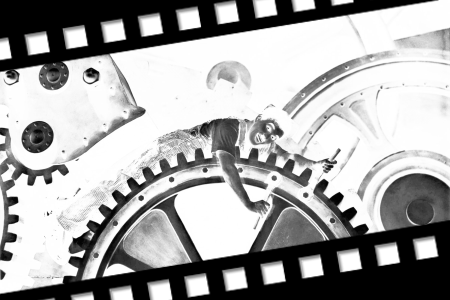
[3028] CINEMANIA: Guess the movie title - See negative of movie scene and guess the title. Length of words in solution: 6,5 - #brainteasers #movie #film #cinemania - Correct Answers: 31 - The first user who solved this task is Djordje Timotijevic
BRAIN TEASERS
enter your answer and press button OK

CINEMANIA: Guess the movie title

See negative of movie scene and guess the title. Length of words in solution: 6,5
Correct answers: 31
The first user who solved this task is Djordje Timotijevic.
#brainteasers #movie #film #cinemania
Register with your Google Account and start collecting points.
Check your ranking on list.

Great News

The day after a man lost his wife in a scuba diving accident, he was greeted by two grim-faced policemen at his door.

"We’re sorry to call on you at this hour, Mr. Wilkens, but we have some information about your wife."

"Well, tell me!" the man said.

The policeman said: "We have some bad news, some good news and some really great news. Which do you want to hear first?"

Fearing the worst, Mr. Wilkens said: "Give me the bad news first."

So the policeman said: "I’m sorry to tell you sir, but this morning we found your wife’s body in San Francisco Bay."

"Oh my god!," said Mr. Wilkens, overcome by emotion. Then, remembering what the policeman had said, he asked: "What’s the good news?"

"Well," said the policeman, "When we pulled her up she had two five-pound lobsters and a dozen good size Dungeness crab on her."

"If that’s the good news, then what’s the great news?" Mr. Wilkens demanded.

The policeman said: "We’re going to pull her up again tomorrow morning."

Jokes of the day - Daily updated jokes. New jokes every day.
Follow Brain Teasers on social networks

Brain Teasers

puzzles, riddles, mathematical problems, mastermind, cinemania...

Alexandre Edmond Becquerel

Born 24 Mar 1820; died 11 May 1891 at age 71.French physicist who was the son of the chemist Antoine-César Becquerel and the father of physicist Henri Becquerel (who discovered radioactivity). His own experimental work was done in electricity, optics and magnetism. He measured properties of electric currents, how they arise, and discovered (1840) electric currents in certain chemical reactions initiated by light. He studied diamagnetism (1845-46). In 1855, he discovered that simply displacing a metallic conductor in a liquid would produce some electric current. He invented the phosphoroscope to measure short durations of phosphorescence of materials after exposure to bright light, and was also able to examine the spectrum of the light emanating from luminescent bodies.«
This site uses cookies to store information on your computer. Some are essential to help the site properly. Others give us insight into how the site is used and help us to optimize the user experience. See our privacy policy.