CINEMANIA: Guess the movie title
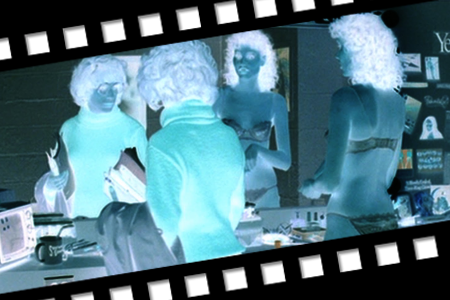
[3671] CINEMANIA: Guess the movie title - See negative of movie scene and guess the title. Length of words in solution: 7 - #brainteasers #movie #film #cinemania - Correct Answers: 24 - The first user who solved this task is On On Lunarbasil
BRAIN TEASERS
enter your answer and press button OK

CINEMANIA: Guess the movie title

See negative of movie scene and guess the title. Length of words in solution: 7
Correct answers: 24
The first user who solved this task is On On Lunarbasil.
#brainteasers #movie #film #cinemania
Register with your Google Account and start collecting points.
Check your ranking on list.

Why the sun lightens our hair...

Why the sun lightens our hair, but darkens our skin?
Why women can't put on mascara with their mouth closed?
Why you don't ever see the headline "Psychic Wins Lottery"?
Why "abbreviated" is such a long word?
Why doctors call what they do "practice"?
Why you have to click on "Start" to stop Windows XP?
Why lemon juice is made with artificial flavor, while dishwashing liquid is made with real lemons?
Why the man who invests all your money is called a broker?
Why there isn't mouse-flavored cat food?
Who tastes dog food when it has a "new & improved" flavor?
Why they sterilize the needle for lethal injections?
Why they don't make the whole plane out of the material used for the indestructible black box ?
Why sheep don't shrink when it rains?
Why they are called apartments when they are all stuck together?
If con is the opposite of pro, is Congress the opposite of progress?
Why they call the airport "the terminal" if flying is so safe?
Jokes of the day - Daily updated jokes. New jokes every day.
Follow Brain Teasers on social networks

Brain Teasers

puzzles, riddles, mathematical problems, mastermind, cinemania...

Fred Whipple

Died 30 Aug 2004 at age 97 (born 5 Nov 1906).Fred Lawrence Whipple was an American astronomer who proposed the “dirty snowball” model for comet nuclei. In the 1930s, using a new, two-station method of photography, he determined meteor trajectories and found that nearly all visible meteors are made up of fragile material from comets, and that none come from beyond the solar system. Whipple suggested (1950) that comets have icy cores inside thin insulating layers of dirt, and that jets of material ejected as a result of solar heating were the cause of orbital changes. This model was confirmed in 1986 when spacecraft flew past comet Halley. Whipple's work on tracking artificial satellites led to improved knowledge of the shape of the earth and greatly improved positions on earth.
This site uses cookies to store information on your computer. Some are essential to help the site properly. Others give us insight into how the site is used and help us to optimize the user experience. See our privacy policy.