CINEMANIA: Guess the movie title
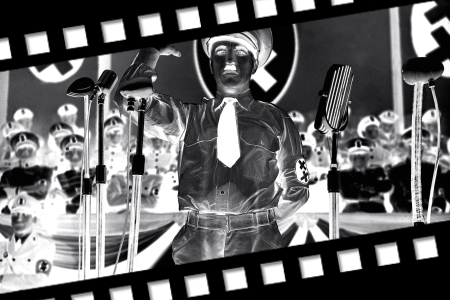
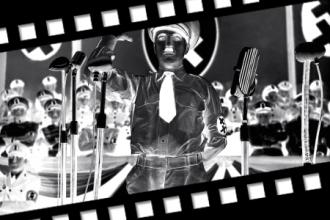
[3678] CINEMANIA: Guess the movie title - See negative of movie scene and guess the title. Length of words in solution: 3,5,8 - #brainteasers #movie #film #cinemania - Correct Answers: 24 - The first user who solved this task is On On Lunarbasil
BRAIN TEASERS
enter your answer and press button OK

CINEMANIA: Guess the movie title

See negative of movie scene and guess the title. Length of words in solution: 3,5,8
Correct answers: 24
The first user who solved this task is On On Lunarbasil.
#brainteasers #movie #film #cinemania
Register with your Google Account and start collecting points.
Check your ranking on list.

Goldfish burial

Little eight-year-old Nancy was in the garden filling in a hole when her neighbor peered over the fence. Interested in what the youngster was doing, he asked: "What are you doing there, Nancy?"

"My goldfish died," Nancy sobbed. "And I've just buried him."

The obnoxious neighbor laughed and said condescendingly: "That's a really big hole for a little goldfish, don't you think?"

Nancy patted down the last heap of earth with her shovel and replied: "That's because he's inside your cat."

Jokes of the day - Daily updated jokes. New jokes every day.
Follow Brain Teasers on social networks

Brain Teasers

puzzles, riddles, mathematical problems, mastermind, cinemania...

Robert Schrieffer

Born 31 May 1931.John Robert Schrieffer is an American physicist whoshared(with John Bardeen and Leon N. Cooper) the 1972 Nobel Prize for Physics for developing the BCS theory (for their initials), the first successful microscopic theory of superconductivity. Although first described by Kamerlingh Onnes (1911), no theoretical explanation had been accepted. It explains how certain metals and alloys lose all resistance to electrical current at extremely low temperatures. The insight of the BCS theory is that at very low temperatures, under certain conditions, electrons can form bound pairs (Cooper pairs). This pair of electrons acts as a single particle in superconductivity. Schrieffer continued to focus his research on particle physics, metal impurities, spin fluctuations, and chemisorption.
This site uses cookies to store information on your computer. Some are essential to help the site properly. Others give us insight into how the site is used and help us to optimize the user experience. See our privacy policy.