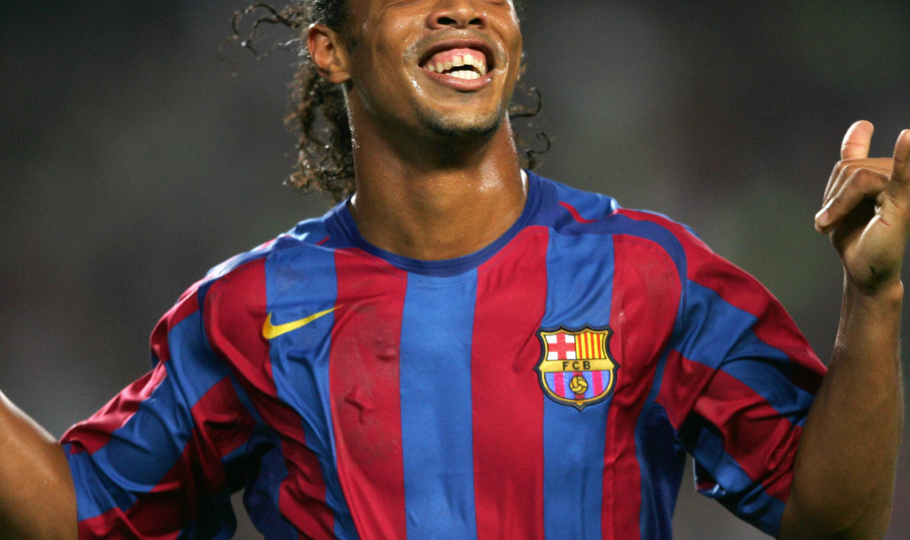
Can you name the athletes by the picture?
[2636] Can you name the athletes by the picture? - Can you name the athletes by the picture? - #brainteasers #riddles #sport - Correct Answers: 69 - The first user who solved this task is Erkain Mahajanian
BRAIN TEASERS
enter your answer and press button OK

Can you name the athletes by the picture?

Can you name the athletes by the picture?
Correct answers: 69
The first user who solved this task is Erkain Mahajanian.
#brainteasers #riddles #sport
Register with your Google Account and start collecting points.
Check your ranking on list.

A blonde's car gets a flat ti...

A blonde's car gets a flat tire on the Interstate one day So she eases it over onto the shoulder of the road.
She carefully steps out of the car and opens the trunk. She then takes out two cardboard men, unfolds them and stands them at the rear of the vehicle facing oncoming traffic. The lifelike cardboard men are in trench coats exposing their nude bodies to approaching drivers...
Not surprisingly, the traffic became snarled and backed up. It wasn't very long before a police car arrives.
The Officer, clearly enraged, approaches the blonde of the disabled vehicle yelling, "What is going on here?"
"My car broke down, Officer" says the woman, calmly.
"Well, what the hell are these obscene cardboard pictures doing here by the road?!" asks the Officer...
"Helllllooooo, those are my emergency flashers!" she replies.
Jokes of the day - Daily updated jokes. New jokes every day.
Follow Brain Teasers on social networks

Brain Teasers

puzzles, riddles, mathematical problems, mastermind, cinemania...

George Robert Stibitz

Born 30 Apr 1904; died 31 Jan 1995 at age 90.U.S. mathematician who was regarded by many as the "father of the modern digital computer." While serving as a research mathematician at Bell Telephone Laboratories in New York City, Stibitz worked on relay switching equipment used in telephone networks. In 1937, Stibitz, a scientist at Bell Laboratories built a digital machine based on relays, flashlight bulbs, and metal strips cut from tin-cans. He called it the "Model K" because most of it was constructed on his kitchen table. It worked on the principle that if two relays were activated they caused a third relay to become active, where this third relay represented the sum of the operation. Also, in 1940, he gave a demonstration of the first remote operation of a computer.
This site uses cookies to store information on your computer. Some are essential to help the site properly. Others give us insight into how the site is used and help us to optimize the user experience. See our privacy policy.