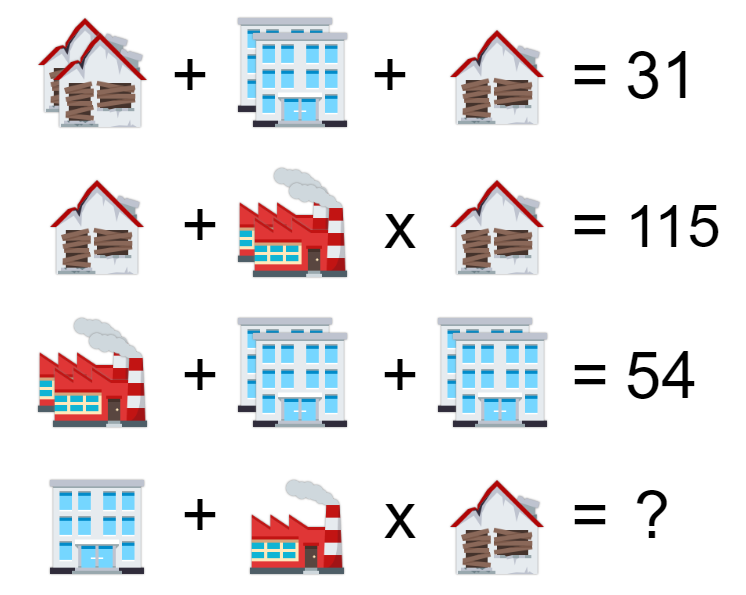
Can you replace the question mark with a number?
[6372] Can you replace the question mark with a number? - MATH PUZZLE: Can you replace the question mark with a number? - #brainteasers #math #riddles - Correct Answers: 45 - The first user who solved this task is Nasrin 24 T
BRAIN TEASERS
enter your answer and press button OK

Can you replace the question mark with a number?

MATH PUZZLE: Can you replace the question mark with a number?
Correct answers: 45
The first user who solved this task is Nasrin 24 T.
#brainteasers #math #riddles
Register with your Google Account and start collecting points.
Check your ranking on list.

Returning home from work, a bl...

Returning home from work, a blonde was shocked to find her house ransacked and burglarized. She telephoned the police at once and reported the crime. The police dispatcher broadcast the call on the radio, and a K-9 unit, patrolling nearby, was the first to respond.
As the K-9 officer approached the house with his dog on a leash, the blonde ran out on the porch, shuddered at the sight of the cop and his dog, then sat down on the steps. Putting her face in her hands, she moaned, 'I come home to find all my possessions stolen. I call the police for help, and what do they do? They send me a BLIND policeman!'
Jokes of the day - Daily updated jokes. New jokes every day.
Follow Brain Teasers on social networks

Brain Teasers

puzzles, riddles, mathematical problems, mastermind, cinemania...

Thin-film memory

In 1960, the first electronic computer to employ thin-film memory was announced when Sperry Rand Corporation, of St. Paul, Minn., unveiled a new computer, known as Univac 1107 [left]. Thin film magnetic memory technology was developed by Sperry Rand through government funded research. A thin film (4 millionths of an inch thick) of iron-nickel alloy was deposited on small glass plates. This provided very fast access times in the range of 0.67 microseconds, but was very expensive to produce. The Univac 1107, intended for the civilian marketplace, used thin film memory only for its 128-word general register stack. Military computers, where money was less of a concern, used larger amounts of thin film memory.
This site uses cookies to store information on your computer. Some are essential to help the site properly. Others give us insight into how the site is used and help us to optimize the user experience. See our privacy policy.