Chess Knight Move
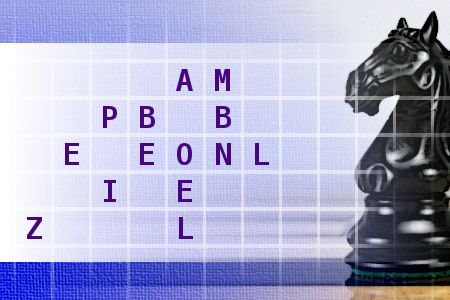
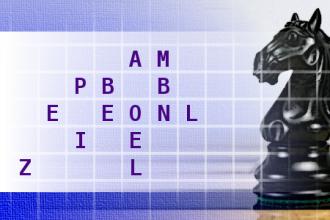
[1704] Chess Knight Move - Find the country and its capital city, using the move of a chess knight. First letter is B. Length of words in solution: 6,8. - #brainteasers #wordpuzzles #chessknightmove - Correct Answers: 54 - The first user who solved this task is Sanja Šabović
BRAIN TEASERS
enter your answer and press button OK

Chess Knight Move

Find the country and its capital city, using the move of a chess knight. First letter is B. Length of words in solution: 6,8.
Correct answers: 54
The first user who solved this task is Sanja Šabović.
#brainteasers #wordpuzzles #chessknightmove
Register with your Google Account and start collecting points.
Check your ranking on list.

A pain in the leg

An old man goes to his doctor, complaining about a pain in his leg that doesn't heal, and wants a diagnosis and explanation. The doctor checks out his leg, but can't find anything wrong, so he gives the old guy a full physical exam, and still can't come up with any possible explanation for the pain.

The doctor hands the patient his bill and says, "I'm sorry, but the pain in your leg is simply caused by old age; there's nothing I can do about it."

The old man replies with a look of disbelief, "That's impossible! That can't be!"

The Doctor says, "What do you mean? I'm the expert here; if you know so much, how can you say it's NOT old age?"

The patient answers, "I'm no doctor but it doesn't take a medical degree to tell that your diagnosis is wrong. Clearly you're mistaken. After all, my other leg feels just fine."

"So what?" says the doctor "What difference does that make?"

"Well it doesn't hurt a bit, and it's the SAME AGE!"

Jokes of the day - Daily updated jokes. New jokes every day.
Follow Brain Teasers on social networks

Brain Teasers

puzzles, riddles, mathematical problems, mastermind, cinemania...

Edward Daniel Clarke

Died 9 Mar 1822 at age 52 (born 5 Jun 1769).English mineralogist and traveller who amassed a valuable collection of minerals. In 1799, he began a 3-year tour through Asia Minor, Italy, Greece, Scandinavia and Siberia, where he also collected maps, statues and sarcophagi, manuscripts, and Greek coins. He was the first professor of mineralogy at Cambridge University (1808). In 1817 he became librarian there, until his health failed, though he continued to lecture until 1821. He had a significant impact through his teaching of minerology in terms of crystallography and the new chemistry, and through the topological geology and volcanological observations in his widely read Travels (6 vols. 1810-23). His mineral collection was bought by Cambridge at his death for 1,500 pounds.
This site uses cookies to store information on your computer. Some are essential to help the site properly. Others give us insight into how the site is used and help us to optimize the user experience. See our privacy policy.