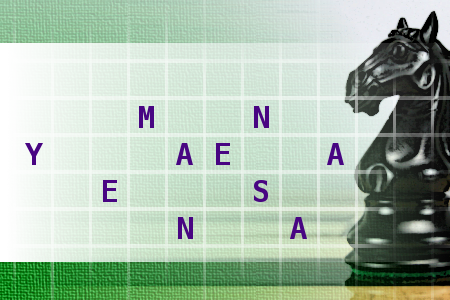
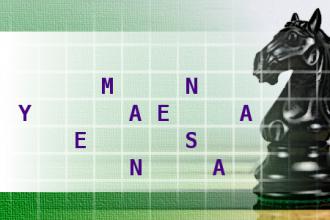
Chess Knight Move
Find the country and its capital city, using the move of a chess knight. First letter is Y. Length of words in solution: 5,5.
Sizing up the opportunity
A man walks into a bar with a monkey in tow. The man sits down at the bar and orders a beer. The bartender hands him a beer and watches the man's monkey run around along the bar.
The monkey grabs a peanut and swallows it whole, then grabs a slice a lime and swallows that whole.
Finally, the monkey jumps onto a pool table, grabs the cue ball and manages to shove it in his mouth then swallow it whole as well. The bartender asks the man, "You see what your monkey's done?"
The man looks up from his beer and says, "No...what's he done now?" The bartender tells the man and the man apologizes, pays for the damage done and leaves with his monkey.
The bartender doesn't see the man at the bar for a month, but the man does return with the same monkey in tow.
The man asks for a beer, and the bartender obliges. The monkey proceeds to jump up on the bar, grabs a cherry, shoves it up his butt then takes it out and swallows it whole.
The bartender says to the man, "You see what your monkey's done?!"
The man looks up from his beer and says, "No...what's he done now?" The bartender tells him.
The man replies, "Yeah, he does that now...After the cue ball he checks to make sure he can get it out before he swallows it."