Chess Knight Move
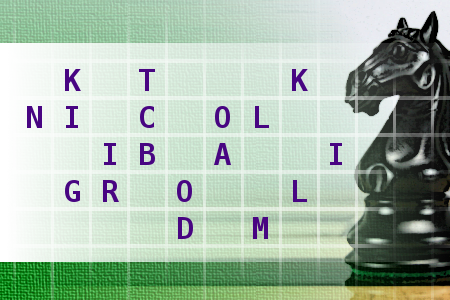
[5706] Chess Knight Move - Find the title of novel, using the move of a chess knight. First letter is T. Length of words in solution: 2,4,1,11. - #brainteasers #wordpuzzles #chessknightmove - Correct Answers: 27 - The first user who solved this task is Djordje Timotijevic
BRAIN TEASERS
enter your answer and press button OK

Chess Knight Move

Find the title of novel, using the move of a chess knight. First letter is T. Length of words in solution: 2,4,1,11.
Correct answers: 27
The first user who solved this task is Djordje Timotijevic.
#brainteasers #wordpuzzles #chessknightmove
Register with your Google Account and start collecting points.
Check your ranking on list.

Parents explaining body parts

A family is at the dinner table. The son asks the father, “Dad, how many kinds of boobs are there?”

The father, surprised, answers.

“Well, son, a woman goes through three phases. In her 20s, a woman’s breasts are like melons, round and firm. In her 30s and 40s, they are like pears, still nice, hanging a bit. After 50, they are like onions.”

“Onions?” the son asks.

“Yes. You see them and they make you cry.”

This infuriated his wife and daughter. The daughter asks, “Mom, how many different kinds of willies are there?”

The mother smiles and says, “Well, dear, a man goes through three phases also. In his 20s, his willy is like an oak tree, mighty and hard. In his 30s and 40s, it’s like a birch, flexible but reliable. After his 50s, it’s like a Christmas tree.”

“A Christmas tree?” the daughter asks. “Yes, dead from the root up and the balls are just for decoration.”

Jokes of the day - Daily updated jokes. New jokes every day.
Follow Brain Teasers on social networks

Brain Teasers

puzzles, riddles, mathematical problems, mastermind, cinemania...

John Ulric Nef

Died 13 Aug 1915 at age 53 (born 14 Jun 1862).Swiss-American chemist whose studies demonstrated that carbon can have a valence (i.e., affinity for electrons) of two (such as quinone) as well as a valence of four, thus greatly advancing the understanding of theoretical organic chemistry. He provided a basis for the modern system of chemical notation. He studied tautomerism, especially of nitroparaffins, and discovered what is now called the "Nef reaction"; the acid-catalyzed conversion of primary and secondary nitroalkanes to aldehydes and ketones, respectively. His major research was on bivalent carbon, including isonitriles, carbon monoxide, fulminates and methylene. In later years, he studied the complex reactions of sugars in alkali and acid.
This site uses cookies to store information on your computer. Some are essential to help the site properly. Others give us insight into how the site is used and help us to optimize the user experience. See our privacy policy.