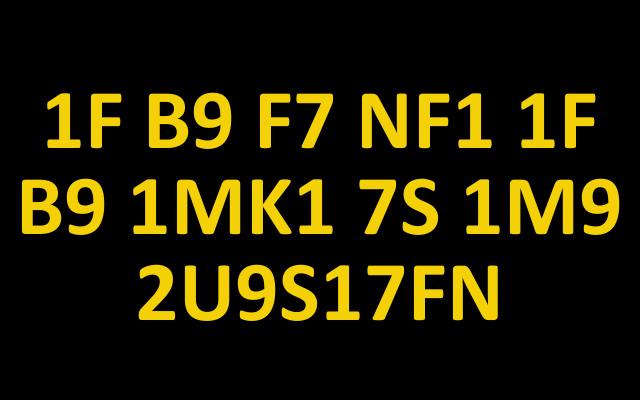
Decrypt hidden message
[2454] Decrypt hidden message - Can you decrypt hidden message (1F B9 F7 NF1 1F B9 1MK1 7S 1M9 2U9S17FN)? - #brainteasers #wordpuzzles #riddles - Correct Answers: 24 - The first user who solved this task is Sanja Šabović
BRAIN TEASERS
enter your answer and press button OK

Decrypt hidden message

Can you decrypt hidden message (1F B9 F7 NF1 1F B9 1MK1 7S 1M9 2U9S17FN)?
Correct answers: 24
The first user who solved this task is Sanja Šabović.
#brainteasers #wordpuzzles #riddles

Register with your Google Account and start collecting points.
Check your ranking on list.

Few more Dad jokes

Dad jokes are here.
Third Sunday of June is Father's Day.
Do the math.

I've opened a restaurant called "Peace And Quiet."
Kids meals only $150

What do you call a pencil with two erasers?
Pointless!

Why are pupils are the last part of your body to stop working when you die?
They dilate.

What is the most popular time for a dentist appointment?
2:30

What do you call cheese that isn't yours?
Nacho cheese.

Did you hear about that person who was afraid of jumping a hurdle?
They got over it.

Why are elevator jokes so good?
They work on many levels!

Why did the computer get mad at the printer?
Because it didn't like its toner voice.

Why did the broom decide to go to bed?
It was very sweepy.

Why are nurses always running out of red crayons?
Because they often have to draw blood.

Why was the woman afraid for the calendar?
Its days were numbered.

What did the police officer say to his belly-button?
You're under a vest.

Why did the coffee go to the police?
To report a mugging.

Why is Peter Pan always flying?
Because he Neverlands.

Jokes of the day - Daily updated jokes. New jokes every day.
Follow Brain Teasers on social networks

Brain Teasers

puzzles, riddles, mathematical problems, mastermind, cinemania...

First radio entertainment

In 1906, Reginald A. Fessenden gave what is generally considered to be the first broadcast of entertainment by radio, as part of the ongoing promotion of the new system using his new alternator- transmitter. He had been working since 1898 on being able to transmit audio, not just dots-and-dashes, since 1898. Three days earlier, he had demonstrated it to invited representatives from a number of organizations, among them was the American Telephone & Telegraph Company. Fessenden and his financial backers dearly hoped AT&T would be so impressed it would buy the rights to the patents which covered the new system. The AT&T Co. found it was was “admirably adapted to the transmission of news, music, etc.”simultaneously to multiple locations, but decided that it was not yet refined enough for commercial telephone service.
This site uses cookies to store information on your computer. Some are essential to help the site properly. Others give us insight into how the site is used and help us to optimize the user experience. See our privacy policy.