Find a famous person
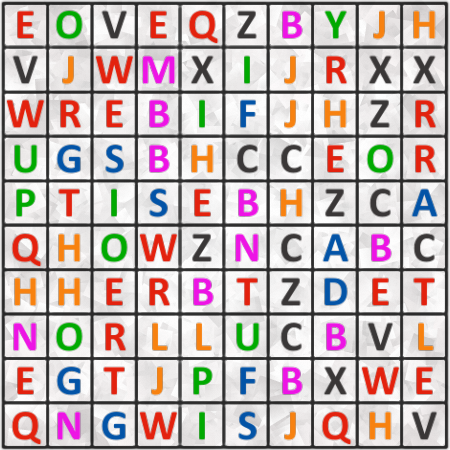
[2088] Find a famous person - Find the first and the last name of a famous person. Text may go in all 8 directions. Length of words in solution: 7,6. - #brainteasers #wordpuzzles - Correct Answers: 39 - The first user who solved this task is Djordje Timotijevic
BRAIN TEASERS
enter your answer and press button OK

Find a famous person

Find the first and the last name of a famous person. Text may go in all 8 directions. Length of words in solution: 7,6.
Correct answers: 39
The first user who solved this task is Djordje Timotijevic.
#brainteasers #wordpuzzles
Register with your Google Account and start collecting points.
Check your ranking on list.

IT Students

An IT student is walking along with his bike when another IT student walks up to him and goes “Nice bike. Where did you get it?”

The first student says, “The other day, this beautiful woman ran up to me with this bike, threw it on the ground, ripped off all her clothes and said ‘Take anything you want!’”

The first student says, “So I took the bike”.

The second student says, “Good choice. The clothes probably wouldn’t have fit”.

Jokes of the day - Daily updated jokes. New jokes every day.
Follow Brain Teasers on social networks

Brain Teasers

puzzles, riddles, mathematical problems, mastermind, cinemania...

C. Lloyd Morgan

Born 6 Feb 1852; died 6 Mar 1936 at age 84.C(onwy) Lloyd Morgan was a British zoologist and psychologist, best remembered for coining Morgan's Canon expressing that the interpretation of animal behavior should be described in the simplest possible terms: "In no case may we interpret an action as the outcome of the exercise of a higher psychical faculty, if it can be interpreted as the outcome of one which stands lower in the psychological scale." (In 1947, Philip L. Harriman stated that Morgan's Canon was simply a specialised form of Occam's razor applied to animal psychology.) For his work, Morgan is sometimes called the founder of comparative, or animal, psychology. His Canon was significant in developing concepts of behaviorism in twentieth century academic psychology.«
This site uses cookies to store information on your computer. Some are essential to help the site properly. Others give us insight into how the site is used and help us to optimize the user experience. See our privacy policy.