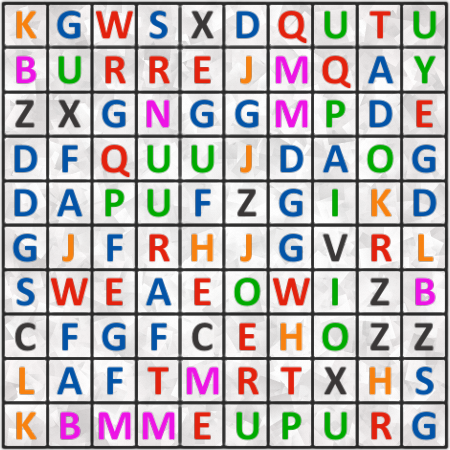

Find a famous person
Find the first and the last name of a famous person. Text may go in all 8 directions. Length of words in solution: 4,7.
Blondes it's not about gender
There was an Irishman, a Mexican, and a blond guy who worked construction together. They were working on top of a building one day, and it was lunch time. The Irish man opens his lunch pail and he sees he has cabbage and beef, and he says, 'If I get one more beef and cabbage for lunch I'm gonna jump off of this building!'
Then the Mexican opens his lunch pail and he gets a burrito, he says, 'if I get one more burrito for lunch I'm gonna jump off this building!'
The blond man opens his lunch pail and gets a bologna sandwich. He says, 'if I get one more bologna sandwich I'm gonna jump off of this building!'
The next day the Irish man opens his lunch pail and finds cabbage and beef so he jumps off the building to his death.
Then the Mexican opens hid lunch pail and finds a burrito so he jumps off the building to his death.
Then the blond guy opens his lunch pail and finds a bologna sandwich, so he jumps off to his death as well.
The next day at their funeral the Irish man's wife said, 'If I only knew he was sick of cabbage and beef I would have packed him something else.'
Then the Mexican's wife then said, ''If I only knew he didn't like burritos, I would have packed something else.''
Finally, the blond man's wife said, 'I don't know what his problem was! He packed his own lunch!''