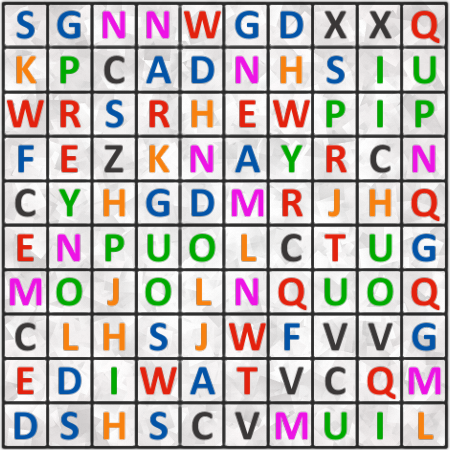
Find a famous person
Find the first and the last name of a famous person. Text may go in all 8 directions. Length of words in solution: 4,8.Correct answers: 22
The first user who solved this task is Manguexa Wagle.
#brainteasers #wordpuzzles

There were these two blondes d...
There were these two blondes driving along the highway looking for a place to stop and picnic.
The first blonde says, "Let's stop here, and have our picnic under that tree."
The other says, "No! Let's have it right here in the middle of the road."
They argued about it for a bit, but finally agreed to have it in the middle of the road.
All of a sudden, a car comes speeding towards them and has to swerve into the tree to keep from hitting them.
The one blonde says to the other, "See? If we were under that tree, we'd be dead now!"
The first blonde says, "Let's stop here, and have our picnic under that tree."
The other says, "No! Let's have it right here in the middle of the road."
They argued about it for a bit, but finally agreed to have it in the middle of the road.
All of a sudden, a car comes speeding towards them and has to swerve into the tree to keep from hitting them.
The one blonde says to the other, "See? If we were under that tree, we'd be dead now!"