Find a famous person
[4509] Find a famous person - Find the first and the last name of a famous person. Text may go in all 8 directions. Length of words in solution: 8,5. - #brainteasers #wordpuzzles - Correct Answers: 34 - The first user who solved this task is Manguexa Wagle
BRAIN TEASERS
enter your answer and press button OK

Find a famous person

Find the first and the last name of a famous person. Text may go in all 8 directions. Length of words in solution: 8,5.
Correct answers: 34
The first user who solved this task is Manguexa Wagle.
#brainteasers #wordpuzzles
Register with your Google Account and start collecting points.
Check your ranking on list.

Brave captain

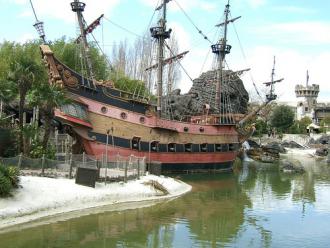
One fine day, brave Captain Smith and his crew of sailors were sailing the ocean blue.

Suddenly, on the horizon, there loomed a ship with a skull and crossbones raised on the mast.

The crew was frantic, seeking refuge and asking the captain what to do.

Brave Captain Smith looked at the approaching ship for a moment and said, "Bring me my red shirt."

The call was taken up at once by a cabin boy. As soon as Captain Smith had the shirt in his possession, he ordered the man at the wheel to head straight for the pirate ship.

In the ensuing fight, the pirate ship was all but destroyed.

The sailors were recounting their individual triumphs afterwards when someone asked Captain Smith why he had asked for his red shirt before the battle.

He responded: "If I was wounded, I did not want your confidence to wane. This way, you would keep fighting no matter what happened to me."

The crew had a new found admiration for its captain, and they talked all night about his bravery.

About a week later, there loomed on the horizon 10 pirate ships. Once again, the crew looked to its captain for leadership.

Calmly, Captain Smith said, "Boys, bring me my brown pants!"

Jokes of the day - Daily updated jokes. New jokes every day.
Follow Brain Teasers on social networks

Brain Teasers

puzzles, riddles, mathematical problems, mastermind, cinemania...

First use of chemical symbols in British textbook.

In 1832, Edward Turner wrote a Preface to the 4th edition of his textbook, Elements of Chemistry (published 1833), in which he explained his use of symbols to represent reactants and products in a chemical reaction of Cyanogen, because he found they solved the difficulty of giving a “clear and concise description of. the phenomena in ordinary language.” His was the first use of chemical symbols in a British chemistry textbook. Turner used some algebra-type notation as suggested by William Whewell with parts of Jöns Jacob Berzelius's system, in which iron was represented by Fe (from Ferrum) and oxygen by O. Thus Fe + O represented one oxide of iron, and 2Fe + 3O represented another. Dots over the symbol indicated degree of oxidation, and an underline stood for two equivalents of a substance.«
This site uses cookies to store information on your computer. Some are essential to help the site properly. Others give us insight into how the site is used and help us to optimize the user experience. See our privacy policy.