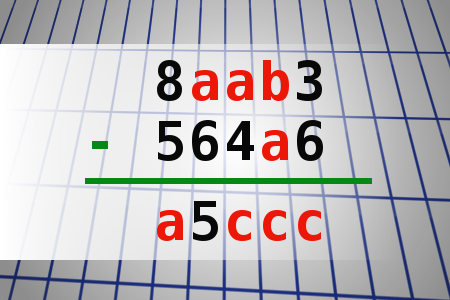
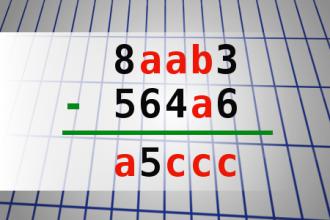
Find number abc
If 8aab3 - 564a6 = a5ccc find number abc. Multiple solutions may exist.
How To Annoy Your Co-Workers
2) Find out where your boss shops and buy exactly thesame outfits. Wear them one day after your boss does. Thisis especially effective if your boss is a different gender thanyou.
3) Make up nicknames for all your co-workers and refer tothem only by these names. 'That's a good point, Sparky.''No, I'm sorry, but I'm going to have to disagree with youthere, Cha-cha.'
4) Send e-mail to the rest of the company telling themexactly what you're doing. For example: 'If anyone needsme, I'll be in the bathroom.'
5) Hi-Lite your shoes. Tell people you haven't lost them asmuch since you did this.
6) While sitting at your desk, soak your fingers in Palmolive.Call everyone Madge.
7) Hang mosquito netting around your cubicle. When youemerge to get coffee, a printout, or whatever, slap yourself atrandom the whole way.
8) Put a chair facing a printer. Sit there all day and tellpeople you're waiting for your document.
9) Every time someone asks you to do something, anything,ask him or her if they want fries with that.
10) Send e-mail back and forth to yourself, engagingyourself in an intellectual debate. Forward the mail to aco-worker and ask her to settle the disagreement.
11) Encourage your colleagues to join you in a littlesynchronized chair-dancing.
12) Put your trash can on your desk. Label it 'IN'.
13) Develope an unnatural and hysterical fear of staplers.
14) Send e-mail messages saying there's free pizza,donuts, or cake in the lunchroom. When people drift back towork complaining that they found none, lean back, pat yourstomach, and say, 'Oh you've got to be faster than that.'
15) Put decaf in the coffeemaker for three weeks. Onceeveryone has withdrawn from caffeine addiction, switch toespresso.