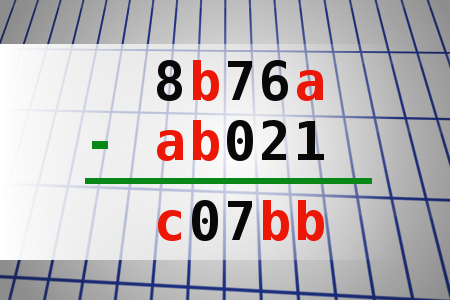
Find number abc
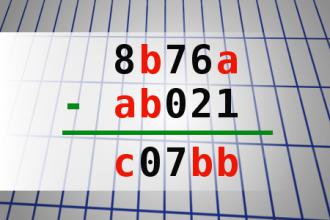
If 8b76a - ab021 = c07bb find number abc. Multiple solutions may exist.Correct answers: 31
The first user who solved this task is Nasrin 24 T.
#brainteasers #math

Two 90-year-old women, Rose an...
Two 90-year-old women, Rose and Barb, had been friends all of their lives. When it was clear that Rose was dying, Barb visited her every day. One day Barb said, "Rose, we both loved playing women's softball all our lives, and we played all through High School. Please do me one favor: when you get to Heaven, somehow you must let me know if there's women's soft-ball there."
Rose looked up at Barb from her deathbed and said, "Barb, you've been my best friend for many years. If it's at all possible, I'll do this favor for you." Shortly after that, Rose passed on.
At midnight a few nights later, Barb was awakened from a sound sleep by a blinding flash of white light and a voice calling out to her, "Barb, Barb."
"Who is it?" asked Barb, sitting up suddenly. "Who is it?"
"Barb, it's me, Rose."
"You're not Rose. Rose just died."
"I'm telling you, it's me, Rose," insisted the voice.
"Rose! Where are you?"
"In Heaven," replied Rose. "I have some really good news and a little bad news."
"Tell me the good news first," said Barb.
"The good news," Rose said, "is that there's Softball in Heaven. Better yet all of our old buddies who died before us are here, too. Better than that, we're all young again. Better still, it's always springtime, and it never rains or snows. And best of all, we can play softball all we want, and we never get tired."
"That's fantastic," said Barb. "It's beyond my wildest dreams! So what'sthe bad news?"
"You're pitching Tuesday."
Rose looked up at Barb from her deathbed and said, "Barb, you've been my best friend for many years. If it's at all possible, I'll do this favor for you." Shortly after that, Rose passed on.
At midnight a few nights later, Barb was awakened from a sound sleep by a blinding flash of white light and a voice calling out to her, "Barb, Barb."
"Who is it?" asked Barb, sitting up suddenly. "Who is it?"
"Barb, it's me, Rose."
"You're not Rose. Rose just died."
"I'm telling you, it's me, Rose," insisted the voice.
"Rose! Where are you?"
"In Heaven," replied Rose. "I have some really good news and a little bad news."
"Tell me the good news first," said Barb.
"The good news," Rose said, "is that there's Softball in Heaven. Better yet all of our old buddies who died before us are here, too. Better than that, we're all young again. Better still, it's always springtime, and it never rains or snows. And best of all, we can play softball all we want, and we never get tired."
"That's fantastic," said Barb. "It's beyond my wildest dreams! So what'sthe bad news?"
"You're pitching Tuesday."