Find number abc
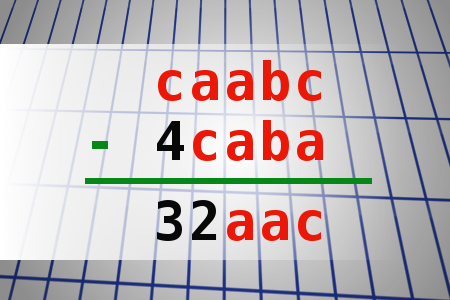
[6176] Find number abc - If caabc - 4caba = 32aac find number abc. Multiple solutions may exist. - #brainteasers #math - Correct Answers: 55 - The first user who solved this task is Nasrin 24 T
BRAIN TEASERS
enter your answer and press button OK

Find number abc

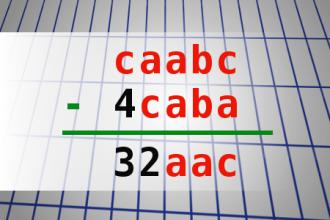
If caabc - 4caba = 32aac find number abc. Multiple solutions may exist.
Correct answers: 55
The first user who solved this task is Nasrin 24 T.
#brainteasers #math
Register with your Google Account and start collecting points.
Check your ranking on list.

Mail

A man was in his front yard mowing grass when his neighbor came out of the house and went straight to the mail box, opened it, then slammed it shut, and stormed back in the house.

A little later they came out again went to the mail box and again opened it, then slammed it shut again.

Angrily, back into the house they went.

As the man was getting ready to edge the lawn, the neighbor came out again, marched to the mail box, opened it and then slammed it closed harder than ever. Puzzled by his neighbors actions the man asked, "Is something wrong?"

To which the neighbor (who was not very computer savvy) replied, "There certainly is! My stupid computer keeps giving me a message saying, "YOU'VE GOT MAIL!"

Jokes of the day - Daily updated jokes. New jokes every day.
Follow Brain Teasers on social networks

Brain Teasers

puzzles, riddles, mathematical problems, mastermind, cinemania...

Leaded gasoline

In 1921, tetraethyl lead was first given a laboratory test as an anti-knock additive to gasoline fuel. The knock in the one-cylinder laboratory engine was utterly silenced. Even at a strength of only 2-3g grams per gallon (1000 to 1 dilution), it had a remarkable ability to quiet the relentless knocking. This invention of Thomas Midgley, Jr., of the General Motors Research Laboratories, located in Dayton, Ohio, was first put on public sale as ethyl gasoline in the same city on 2 Feb 1923. This invention of leaded gasoline came after seven years of testing at least 33,000 compounds. Previously, on hard acceleration, an engine sometimes made knocking, popping or crackling sounds, which sapped power and could damage the engine.
This site uses cookies to store information on your computer. Some are essential to help the site properly. Others give us insight into how the site is used and help us to optimize the user experience. See our privacy policy.