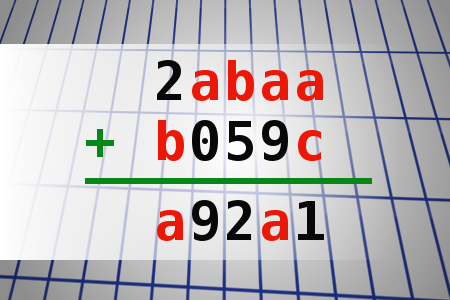
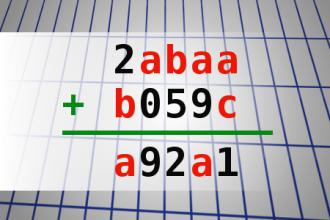
Find number abc
If 2abaa + b059c = a92a1 find number abc. Multiple solutions may exist.Correct answers: 21
The first user who solved this task is Nasrin 24 T.
#brainteasers #math

How Cold Is It Outside?
How Cold Is Cold?
60 Californians put on sweaters (if they can find one)
50 Miami residents turn on the heat
40 You can see your breath, Californians shiver uncontrollably, Minnesotans go swimming
35 Italian cars don't start
32 Water freezes
30 You plan your vacation to Australia
25 Boston water freezes, Californians weep pitiably, Minnesotans eat ice cream, Canadians go swimming
20 Politicians begin to talk about the homeless, New York City water freezes, Miami residents plan vacation further South
15 French cars don't start, Cat insists on sleeping in your bed with you
10 You need jumper cables to get the car going
5 American cars don't start
0 Alaskans put on T-shirts
-10 German cars don't start, Eyes freeze shut when you blink
-15 You can cut your breath and use it to build an igloo, Arkansans stick tongue on metal objects, Miami residents cease to exist
-20 Cat insists on sleeping in pajamas with you, Politicians actually do something about the homeless, Minnesotans shovel snow off roof, Japanese cars don't start
-25 Too cold to think, You need jumper cables to get the driver going
-30 You plan a two week hot bath, Swedish cars don't start
-40 Californians disappear, Minnesotans button top button, Canadians put on sweaters, Your car helps you plan your trip South
-50 Congressional hot air freezes, Alaskans close the bathroom window
-80 Hell freezes over, Polar bears move South
-90 Lawyers put their hands in their own pockets
60 Californians put on sweaters (if they can find one)
50 Miami residents turn on the heat
40 You can see your breath, Californians shiver uncontrollably, Minnesotans go swimming
35 Italian cars don't start
32 Water freezes
30 You plan your vacation to Australia
25 Boston water freezes, Californians weep pitiably, Minnesotans eat ice cream, Canadians go swimming
20 Politicians begin to talk about the homeless, New York City water freezes, Miami residents plan vacation further South
15 French cars don't start, Cat insists on sleeping in your bed with you
10 You need jumper cables to get the car going
5 American cars don't start
0 Alaskans put on T-shirts
-10 German cars don't start, Eyes freeze shut when you blink
-15 You can cut your breath and use it to build an igloo, Arkansans stick tongue on metal objects, Miami residents cease to exist
-20 Cat insists on sleeping in pajamas with you, Politicians actually do something about the homeless, Minnesotans shovel snow off roof, Japanese cars don't start
-25 Too cold to think, You need jumper cables to get the driver going
-30 You plan a two week hot bath, Swedish cars don't start
-40 Californians disappear, Minnesotans button top button, Canadians put on sweaters, Your car helps you plan your trip South
-50 Congressional hot air freezes, Alaskans close the bathroom window
-80 Hell freezes over, Polar bears move South
-90 Lawyers put their hands in their own pockets