Find number abc
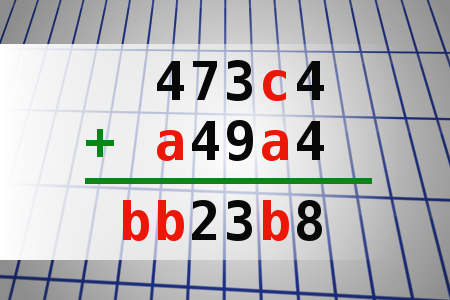
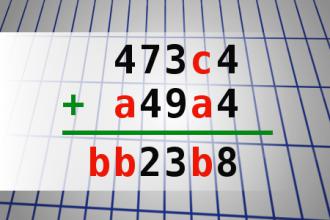
[7339] Find number abc - If 473c4 + a49a4 = bb23b8 find number abc. Multiple solutions may exist. - #brainteasers #math - Correct Answers: 11
BRAIN TEASERS
enter your answer and press button OK

Find number abc

If 473c4 + a49a4 = bb23b8 find number abc. Multiple solutions may exist.
Correct answers: 11
#brainteasers #math
Register with your Google Account and start collecting points.
Check your ranking on list.

Husband wanted

A lonely 70-year-old widow decided that it was time to marry again. She put an ad in the local newspaper that read: "Husband wanted! Must be in my age group, must not beat me, must not run around on me and must still be good in bed. All applicants please apply in person."

The following day, she heard the doorbell. Much to her dismay, she opened the door to see a gray-haired gentleman sitting in a wheelchair. He had no arms or legs.

"You're not really asking me to consider you, are you?" the widow asked: "Just look at you -- you have no legs!"

The old gent smiled: "Therefore, I cannot run around on you!"

"You don't have any arms either!" she snorted.

Again, the old man smiled: "Therefore, I can never beat you!"

She raised an eyebrow and asked intently: "Are you still good in bed?"

The old man leaned back, beamed a big smile and said: "I rang the doorbell, didn't I?"

Jokes of the day - Daily updated jokes. New jokes every day.
Follow Brain Teasers on social networks

Brain Teasers

puzzles, riddles, mathematical problems, mastermind, cinemania...

Edmund Ruffin

Born 5 Jan 1794; died 18 Jun 1865 at age 71.The father of soil chemistry in the U.S., who showed how to restore fertility to depleted soil. Though without formal science education, Ruffin determined that the soil of southeast plantations that had been overused with single-crop production had become more acidic and unable to benefit from fertilizers. The remedy he published (1818) was the spreading of marl to neutralize the acidity. He went further by specifying effective methods of fertilizing, plowing and rotating crops to increase production of grains. He expanded his recommendations in book and journal article form, as well lecturing up to the 1850's. He then became an outspoken secessionist, and took his own life upon the South losing in the U.S. Civil War.
This site uses cookies to store information on your computer. Some are essential to help the site properly. Others give us insight into how the site is used and help us to optimize the user experience. See our privacy policy.