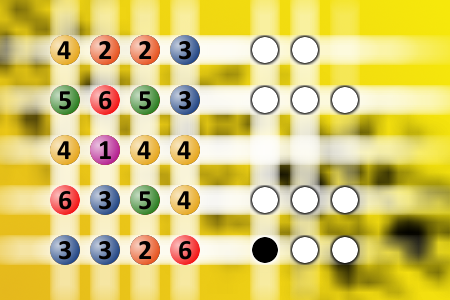
Find the right combination
The computer chose a secret code (sequence of 4 digits from 1 to 6). Your goal is to find that code. Black circles indicate the number of hits on the right spot. White circles indicate the number of hits on the wrong spot.Correct answers: 78
The first user who solved this task is Jasmina Atarac-Pantelic.
#brainteasers #mastermind

Three Vampires Go To A Bar
Three vampires walk into a bar and sit down at a table. The waitress comes over and asks the first vampire what he would like. The first vampire responds, "I vould like some blood."
The waitress turns to the second vampire and asks what he would like. The vampire responds, "I vould like some blood."
The waitress turns to the third vampire and asks what he would like. The vampire responds, "I vould like some plasma."
The waitress looks up and says, "Let me see if I have this order correct. You want two bloods and a blood light?"
The waitress turns to the second vampire and asks what he would like. The vampire responds, "I vould like some blood."
The waitress turns to the third vampire and asks what he would like. The vampire responds, "I vould like some plasma."
The waitress looks up and says, "Let me see if I have this order correct. You want two bloods and a blood light?"