Find the right combination
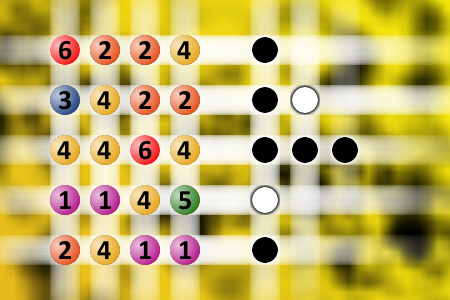
The computer chose a secret code (sequence of 4 digits from 1 to 6). Your goal is to find that code. Black circles indicate the number of hits on the right spot. White circles indicate the number of hits on the wrong spot.Correct answers: 40
The first user who solved this task is On On Lunarbasil.
#brainteasers #mastermind

There was once a great actor w...
There was once a great actor who could no longer remember his lines. After several years of searching, he finally finds a theater where they seem prepared to give him a chance to shine again.
The director says, "This is the most important part, and it has only one line. At the opening you walk on stage carrying a rose. You hold the rose to your nose with just one finger and thumb, sniff the rose deeply and then say the line 'Ah, the sweet aroma of my mistress.'"
The actor is thrilled. All day long before the play, he's practicing his line over and over again. Finally, the time comes. The curtain goes up, the actor walks onto the stage, and with great passion delivers the line, "Ah, the sweet aroma of my mistress."
The theater erupts. The audience is screaming with laughter, but the director is steaming!
"Argh! You idiot!" he cries. "You've ruined me!"
The actor is bewildered, "What happened, did I forget my line?"
"No!" screams the director. "You forgot the rose!"
The director says, "This is the most important part, and it has only one line. At the opening you walk on stage carrying a rose. You hold the rose to your nose with just one finger and thumb, sniff the rose deeply and then say the line 'Ah, the sweet aroma of my mistress.'"
The actor is thrilled. All day long before the play, he's practicing his line over and over again. Finally, the time comes. The curtain goes up, the actor walks onto the stage, and with great passion delivers the line, "Ah, the sweet aroma of my mistress."
The theater erupts. The audience is screaming with laughter, but the director is steaming!
"Argh! You idiot!" he cries. "You've ruined me!"
The actor is bewildered, "What happened, did I forget my line?"
"No!" screams the director. "You forgot the rose!"