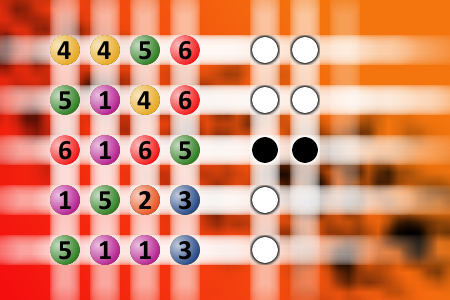

Find the right combination
The computer chose a secret code (sequence of 4 digits from 1 to 6). Your goal is to find that code. Black circles indicate the number of hits on the right spot. White circles indicate the number of hits on the wrong spot.
One more set of Thanksgiving jokes - new from 2023
Because the best part are the side dishes.
Why do turkeys love R-rated movies?
Because they use fowl language.
If pilgrims traveled on the Mayflower, what do college students travel on?
Scholar ships.
Why are Thanksgiving and Halloween similar?
They both have gobble-ins.
Check more of New Thanksgiving jokes from 2023.
How many pastry chefs does it take to make a pie??
3.14.
What are turkeys most thankful for on Thanksgiving?
Vegans.
What do Thanksgiving turkeys become after they die?
Poultrygeists.
What's Inside a Genie's Turkey?
Wishbones.
What did pilgrims use to make cookies?
May Flour!
Check out our collection of new (and old) Thanksgiving jokes.
Why did the Pilgrims eat turkey at Thanksgiving?
Because they couldn't get the moose in the oven!
Why are Thanksgiving bread jokes always funny?
Because they never get mold.
What did Dad say when he was asked to say grace?
“Grace.”
What did the Thanksgiving turkey say to the Christmas ham?
Nice to meat you.
Why don’t side dishes tell jokes?
They’re too corny.
What do you call a sad cranberry?
A blueberry.
What’s the best way to keep a turkey in suspense?
You’ll find out at Thanksgiving dinner!
What role do green beans play in Thanksgiving dinner?
The casse-role.
Need more Thanksgiving jokes? There some Thanksgiving jokes that were new not so long ago Thanksgiving jokes that were new recently