Find the right combination
[7093] Find the right combination - The computer chose a secret code (sequence of 4 digits from 1 to 6). Your goal is to find that code. Black circles indicate the number of hits on the right spot. White circles indicate the number of hits on the wrong spot. - #brainteasers #mastermind - Correct Answers: 9
BRAIN TEASERS
enter your answer and press button OK

Find the right combination

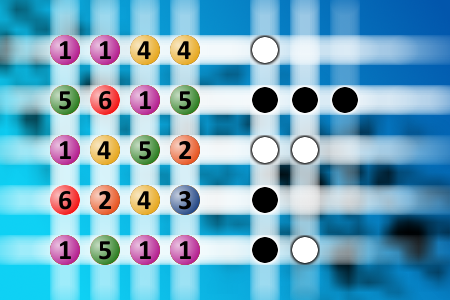
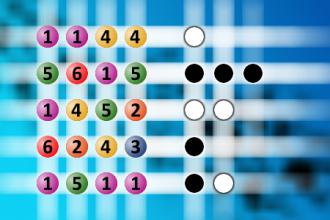
The computer chose a secret code (sequence of 4 digits from 1 to 6). Your goal is to find that code. Black circles indicate the number of hits on the right spot. White circles indicate the number of hits on the wrong spot.
Correct answers: 9
#brainteasers #mastermind
Register with your Google Account and start collecting points.
Check your ranking on list.

Jim was a just out of boot cam...

Jim was a just out of boot camp, and was on his first ship. About two hours out of port, he began to get a bit ill from the motion of the ship. He approached an ensign, also just out of training and on his first cruise.
He saluted and said, "Excuse me sir, I am feeling seasick, and I wondered if I may have permission to go downstairs to the dispensary."
The ensign returned his salute and replied, "Sailor, you are in the Navy now. You don't go downstairs, you go below! There is no dispensary on this ship, there is sickbay. Not only that, that is not the floor, it is a deck; that is not the ceiling, it is the overhead; that is not a pillar, it is a stanchion; that is not a water fountain, it is a scuttlebutt. If I ever hear you using civilian words instead of Naval jargon, I will throw you out of that little round window over there."
Jokes of the day - Daily updated jokes. New jokes every day.
Follow Brain Teasers on social networks

Brain Teasers

puzzles, riddles, mathematical problems, mastermind, cinemania...

Kenneth Geddes Wilson

Born 8 Jun 1936.American physicist who was awarded the 1982 Nobel Prize for Physics for his development of a general procedure for constructing improved theories concerning the transformations of matter called continuous, or second-order, phase transitions. These take place at characteristic temperatures (or pressures), but unlike first-order transitions they occur throughout the entire volume of a material as soon as that temperature (called the critical point) is reached. One example of such a transition is the complete loss of ferromagnetic properties of certain metals when they are heated to their Curie points (about ºC for iron). Wilson's work provided a mathematical strategy for constructing theories that could apply to physical systems near the critical point.
This site uses cookies to store information on your computer. Some are essential to help the site properly. Others give us insight into how the site is used and help us to optimize the user experience. See our privacy policy.