Guess the Band Name
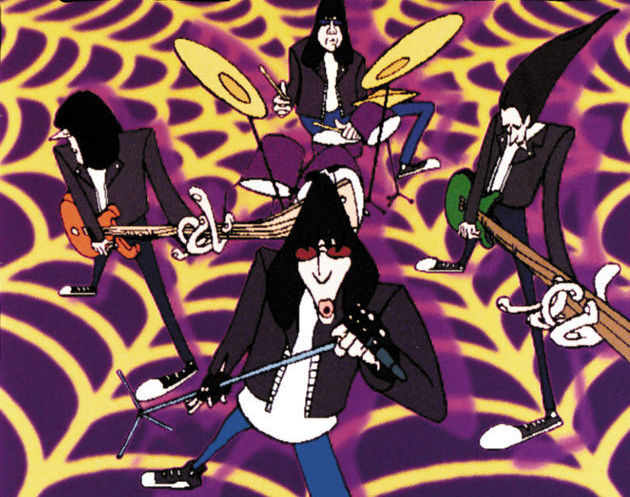
[5054] Guess the Band Name - Which musician band has an album with a cover as in the picture? - #brainteasers #music #riddles - Correct Answers: 28 - The first user who solved this task is Djordje Timotijevic
BRAIN TEASERS
enter your answer and press button OK

Guess the Band Name

Which musician band has an album with a cover as in the picture?
Correct answers: 28
The first user who solved this task is Djordje Timotijevic.
#brainteasers #music #riddles

Register with your Google Account and start collecting points.
Check your ranking on list.

How You Made Money

A young man asked an old rich man how he made his money.
The old guy fingered his worsted wool vest and said, "Well, son, it was 1932. The depth of the Great Depression. I was down to my last nickel.
"I invested that nickel in an apple. I spent the entire day polishing the apple and, at the end of the day, I sold the apple for ten cents.
"The next morning, I invested those ten cents in two apples. I spent the entire day polishing them and sold them at 5:00 pm for 20 cents. I continued this system for a month, by the end of which I'd accumulated a fortune of $1.37."
"And that's how you built an empire?" the boy asked.
"Heavens, no!" the man replied. "Then my wife's father died and left us two million dollars."
Jokes of the day - Daily updated jokes. New jokes every day.
Follow Brain Teasers on social networks

Brain Teasers

puzzles, riddles, mathematical problems, mastermind, cinemania...

Reginald Fessenden

Died 22 Jul 1932 at age 65 (born 6 Oct 1866). Reginald Aubrey Fessenden was a Canadian-American physicist, engineer and inventor with 300 patents. He broadcast the first program of voice and music. In 1893, Fessenden moved to Pittsburgh as the head of electrical engineering at the university, Fessenden read of Marconi's work and began experimenting himself. Marconi could only transmit Morse code. But Fessenden's goal was to transmit the human voice and music. He invented the “continuous wave” AM radio: sound superimposed by amplitude modulation onto a carrier radio wave for transmission. A radio receiver extracts the signal from the carrier wave so the listener hears the original sound. Fessenden made the first long-range transmissions of voice on Christmas Eve 1906 from a station at Brant Rock, Massachusetts, heard hundreds of miles out in the Atlantic.
This site uses cookies to store information on your computer. Some are essential to help the site properly. Others give us insight into how the site is used and help us to optimize the user experience. See our privacy policy.