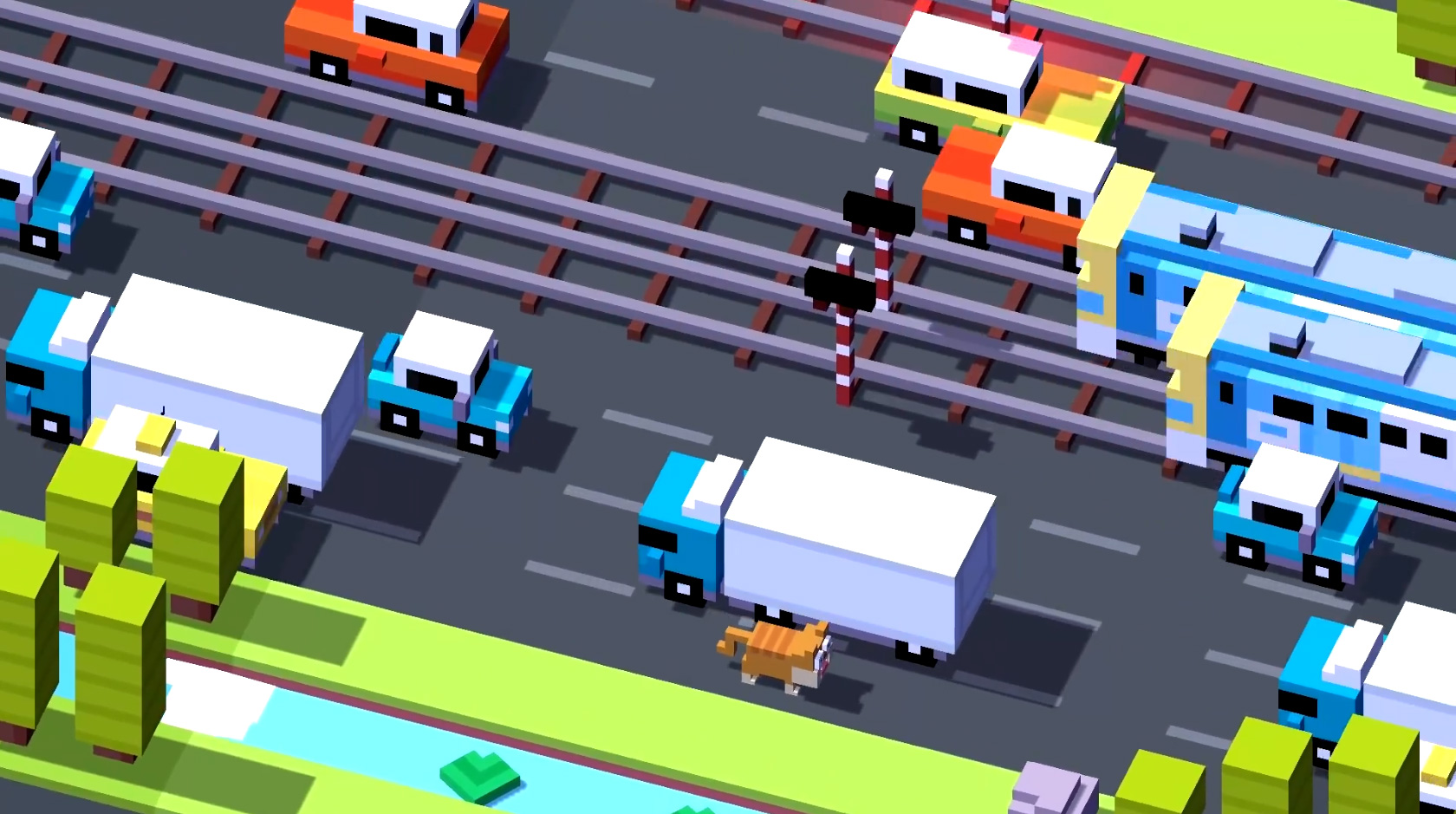
Guess the Game Name
[2435] Guess the Game Name - Look carefully the picture and guess the game name. - #brainteasers #games - Correct Answers: 56 - The first user who solved this task is Roxana zavari
BRAIN TEASERS
enter your answer and press button OK

Guess the Game Name

Look carefully the picture and guess the game name.
Correct answers: 56
The first user who solved this task is Roxana zavari.
#brainteasers #games
Register with your Google Account and start collecting points.
Check your ranking on list.

Defective nails...?

Two guys were doing construction on a house. One of them who was nailing down siding would reach into his nail pouch, pull out a nail, and then either toss it over his shoulder or nail it into the siding.

The other guy, figuring this was worth looking into, asked, "Why are you throwing those nails away?"

The first guy explained, "If I pull a nail out of my pouch and it's pointed towards me, I throw it away 'cause it's defective. If it's pointed toward the house, then I nail it into the siding."

The second guy was outraged. He yelled, "You moron! The nails pointed towards you aren't defective! They're for the other side of the house!"

Jokes of the day - Daily updated jokes. New jokes every day.
Follow Brain Teasers on social networks

Brain Teasers

puzzles, riddles, mathematical problems, mastermind, cinemania...

Louis Agassiz

Died 14 Dec 1873 at age 66 (born 28 May 1807). Jean Louis Rodolphe Agassiz was a Swiss-American naturalist and geologist who made revolutionary contributions to the study of natural science with landmark work on glacier activity and extinct fishes. Agassiz began his work in Europe, having studied at the University of Munich and then as chair in natural history in Neuchatel in Switzerland. While there he published his landmark multi-volume description and classification of fossil fish. In 1846 Agassiz came to the U.S. to lecture before Boston's Lowell Institute. Offered a professorship of Zoology and Geology at Harvard in 1848, he decided to stay, becoming a citizen in 1861. His innovative teaching methods altered the character of natural science education in the U.S.
This site uses cookies to store information on your computer. Some are essential to help the site properly. Others give us insight into how the site is used and help us to optimize the user experience. See our privacy policy.