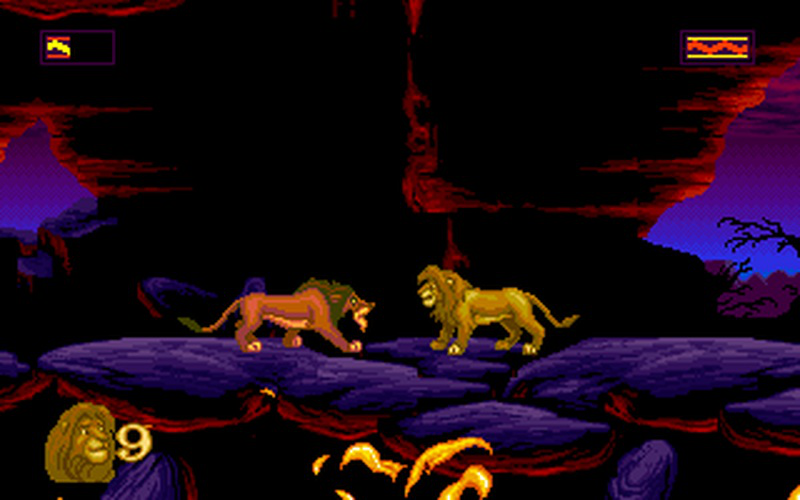
Guess the Game Name
[2458] Guess the Game Name - Look carefully the picture and guess the game name. - #brainteasers #games - Correct Answers: 46 - The first user who solved this task is Djordje Timotijevic
BRAIN TEASERS
enter your answer and press button OK

Guess the Game Name

Look carefully the picture and guess the game name.
Correct answers: 46
The first user who solved this task is Djordje Timotijevic.
#brainteasers #games
Register with your Google Account and start collecting points.
Check your ranking on list.

Whats My Name?

The manager of a large office noticed a new man one day and told him to come into his office. "What's your name?" he asked the new guy.

"John," the new guy replied.

The manager scowled, "Look... I don't know what kind of a namby-pamby place you worked before, but I don't call anyone by their first name. It breeds familiarity and that leads to a breakdown in authority. I refer to my employees by their last name only ... Smith, Jones, Baker ... That's all. I am to be referred to only as Mr. Robertson. Now that we got that straight, what is your last name?"

The new guy sighed, "Darling. My name is John Darling."

"Okay John, the next thing I want to tell you is . . . "

Jokes of the day - Daily updated jokes. New jokes every day.
Follow Brain Teasers on social networks

Brain Teasers

puzzles, riddles, mathematical problems, mastermind, cinemania...

Indian satellite

In 1975, the first satellite built in India was launched from Volgograd Launch Station, Russia, on a Soviet Intercosmos C-1 rocket. It was named Aryabhata, after a noted 5th-century Indian mathematician. The 360-kg satellite had been built during 20 months by the Indian Space Research Organization (ISRO) in Peenya, Bangalore, by a team led by Prof. U. R. Rao. Its shape was a 26-sided polygon, 1.4-m diam., with all faces covered in solar cells, except the top and bottom. It was designed to carry out experiments in X-ray astronomy, aeronomics, and solar physics, communicating with a 46-watt VHF transmitter. However, after only 4 days in orbit, a power failure ended any further experiments. It remained in orbit nearly 17 years, until it reentered the Earth's atmosphere on 11 Feb 1992.«
This site uses cookies to store information on your computer. Some are essential to help the site properly. Others give us insight into how the site is used and help us to optimize the user experience. See our privacy policy.