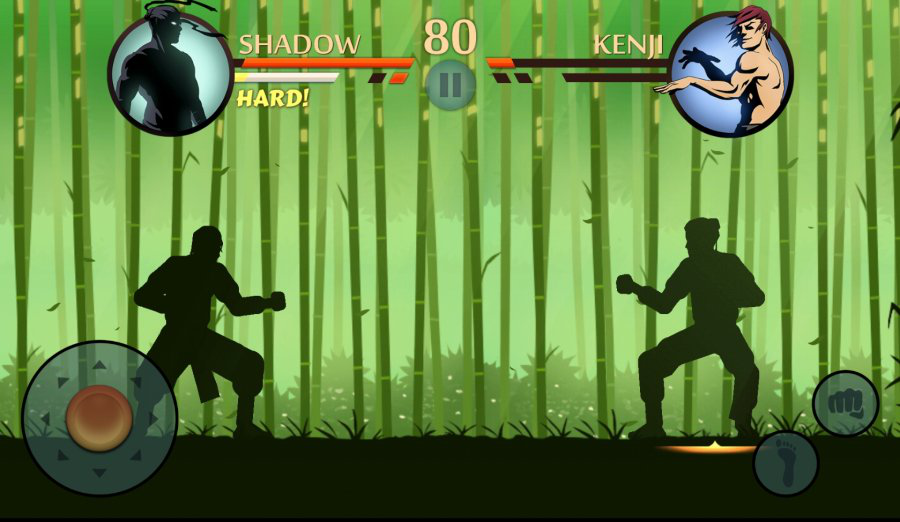
Guess the Game Name
[4252] Guess the Game Name - Look carefully the picture and guess the game name. - #brainteasers #games - Correct Answers: 22 - The first user who solved this task is Manguexa Wagle
BRAIN TEASERS
enter your answer and press button OK

Guess the Game Name

Look carefully the picture and guess the game name.
Correct answers: 22
The first user who solved this task is Manguexa Wagle.
#brainteasers #games
Register with your Google Account and start collecting points.
Check your ranking on list.

We've all heard about people...

We've all heard about people having guts or balls. But do you really know the difference between them? In an effort to keep you informed, the definition of each is listed below:
"Guts" is arriving home late after a night out with the guys, being assaulted by your wife with a broom, and having the guts to say, "Are you still cleaning or are you flying somewhere?"
"Balls," is coming home late after a night out with the guys, smelling of perfume and beer, lipstick on your collar, slapping your wife square on the arse and having the balls to say, "You're next, fatty!"
Jokes of the day - Daily updated jokes. New jokes every day.
Follow Brain Teasers on social networks

Brain Teasers

puzzles, riddles, mathematical problems, mastermind, cinemania...

Sir Derek H.R. Barton

Died 16 Mar 1998 at age 79 (born 8 Sep 1918). Sir Derek Harold Richard Barton was an English chemist, a joint recipient (with Norwegian Odd Hassel) of the 1969 Nobel Prize for Chemistry for research that helped establish conformational analysis (the study of the 3-D geometric structure of complex molecules). In a brief paper in Experienta entitled “The Conformation of the Steroid Nucleus” (1950), Barton showed that organic molecules in general and steroid molecules in particular could be assigned a preferred conformation based on work of chemical physicists, in particular by Odd Hassel. Conformational analysis is useful in the elucidation of configuration, in the planning of organic synthesis, and in the analysis of reaction mechanisms. It is fundamental to a complete understanding of enzymatic processes.
This site uses cookies to store information on your computer. Some are essential to help the site properly. Others give us insight into how the site is used and help us to optimize the user experience. See our privacy policy.