Guess the Game Name
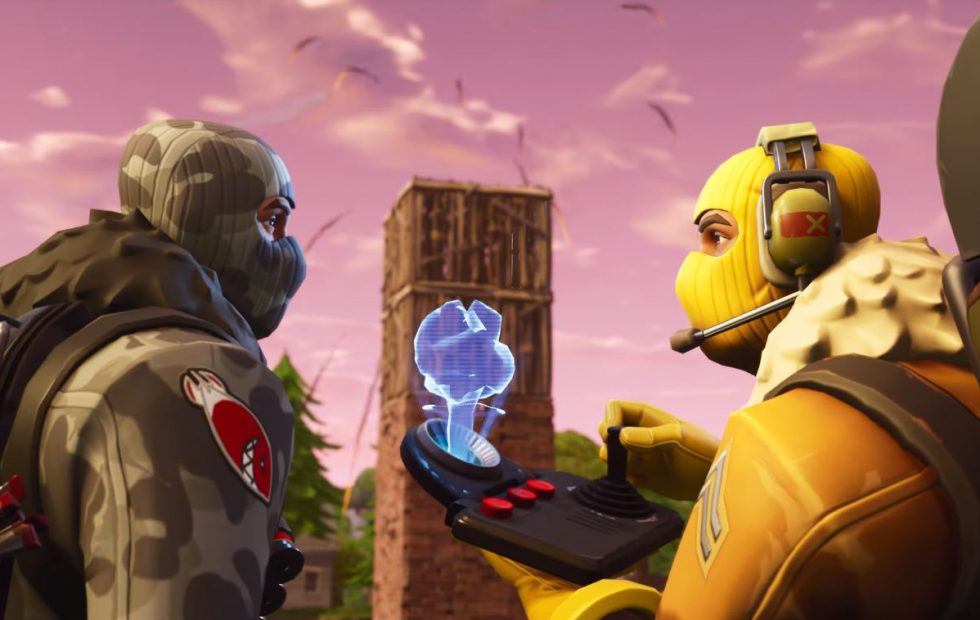
[5401] Guess the Game Name - Look carefully the picture and guess the game name. - #brainteasers #games - Correct Answers: 15 - The first user who solved this task is Djordje Timotijevic
BRAIN TEASERS
enter your answer and press button OK

Guess the Game Name

Look carefully the picture and guess the game name.
Correct answers: 15
The first user who solved this task is Djordje Timotijevic.
#brainteasers #games
Register with your Google Account and start collecting points.
Check your ranking on list.

A stingy old lawyer who had be...

A stingy old lawyer who had been diagnosed with a terminal illness was determined to prove wrong the saying, "You can't take it with you."
After much thought and consideration, the man finally figured out how to take at least some of his money with him when he died. He instructed his wife to go to the bank and withdraw enough money to fill two pillow cases.
He then directed her to take the bags of money to the attic and leave them directly above his bed. His plan: When he passed away, he would reach out and grab the bags on his way to heaven.
Several weeks after the funeral, the deceased lawyer's wife, up in the attic cleaning, came upon the two pillow cases stuffed with cash.
"Oh, that darned old fool," she exclaimed. "I knew he should have had me put the money in the basement."
Jokes of the day - Daily updated jokes. New jokes every day.
Follow Brain Teasers on social networks

Brain Teasers

puzzles, riddles, mathematical problems, mastermind, cinemania...

Sir J.J. Thomson

Born 18 Dec 1856; died 30 Aug 1940 at age 83. Joseph John Thomson was an English physicist who helped revolutionize the knowledge of atomic structure by his discovery of the electron (1897). He received the Nobel Prize for Physics in 1906 and was knighted in 1908. Thomson experimented with currents of electricity inside empty glass tubes, investigating a long-standing puzzle known as “cathode rays.” His experiments prompted him to make a bold proposal: these mysterious rays are streams of particles much smaller than atoms. He called these particles “corpuscles,” and suggested that they might make up all of the matter in atoms. It was startling to imagine particles inside the atom at a time when most people thought that the atom was indivisible, the most fundamental unit of matter.
This site uses cookies to store information on your computer. Some are essential to help the site properly. Others give us insight into how the site is used and help us to optimize the user experience. See our privacy policy.