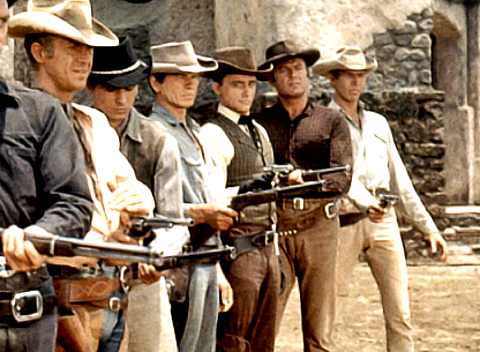
Guess the name of the actor
[2578] Guess the name of the actor - Look carefully at the picture and guess the name of the actor who is first in the line. - #brainteasers #movie #film #cinemania - Correct Answers: 55 - The first user who solved this task is Djordje Timotijevic
BRAIN TEASERS
enter your answer and press button OK

Guess the name of the actor

Look carefully at the picture and guess the name of the actor who is first in the line.
Correct answers: 55
The first user who solved this task is Djordje Timotijevic.
#brainteasers #movie #film #cinemania
Register with your Google Account and start collecting points.
Check your ranking on list.

During a visit to the mental a...

During a visit to the mental asylum, a visitor asked the Director how do you determine whether or not a patient should be institutionalised.
Well, said the Director, we fill up a bathtub, then we offer a teaspoon, a teacup and a bucket to the patient and ask him or her to empty the bathtub.
Oh, I understand, said the visitor.
A normal person would use the bucket because it's bigger than the spoon or the teacup.
No said the Director, A normal person would pull the plug out.
Do you want a bed near the window?
Jokes of the day - Daily updated jokes. New jokes every day.
Follow Brain Teasers on social networks

Brain Teasers

puzzles, riddles, mathematical problems, mastermind, cinemania...

Walther Flemming

Born 21 Apr 1843; died 4 Aug 1905 at age 62. German anatomist who was the first to observe and describe systematically the behaviour of chromosomes in the cell nucleus during normal cell division (mitosis, a term he coined in 1882). Thus, he was a founder of cytogenetics as a branch of science to study chromosomes, the cell's hereditary material. Flemming coined other terms: spireme, aster, chromatin, achromatin, monocentric and dicentric phases. Chromatin (Gr. chroma = colour) referred to certain fragments of the cell nucleus that took on a strong colour from the dyes he used during microscopic study. Flemming did not know of Mendel's work, so 20 years passed before the genetic implications were realized. Chromosomes, formed from cromatin, were named in 1888 by Waldeyer-Hartz.
This site uses cookies to store information on your computer. Some are essential to help the site properly. Others give us insight into how the site is used and help us to optimize the user experience. See our privacy policy.