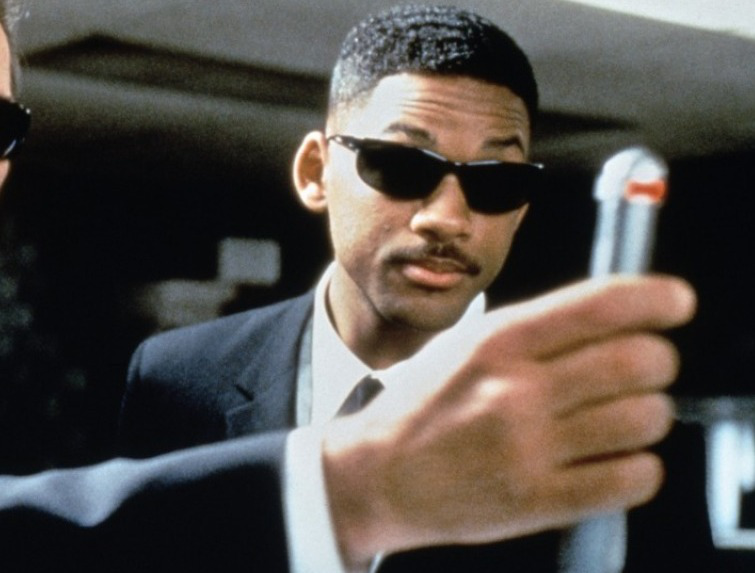
Guess the name of the second actor
[2928] Guess the name of the second actor - Look carefully at the picture and guess the name of the second actor at the scene. - #brainteasers #movie #film #cinemania - Correct Answers: 65 - The first user who solved this task is Roxana zavari
BRAIN TEASERS
enter your answer and press button OK

Guess the name of the second actor

Look carefully at the picture and guess the name of the second actor at the scene.
Correct answers: 65
The first user who solved this task is Roxana zavari.
#brainteasers #movie #film #cinemania
Register with your Google Account and start collecting points.
Check your ranking on list.

One Last Confession

While a man was dying, his wife was maintaining a candlelight vigil by his side. She held his fragile hand, tears running down her face.Her praying woke him from his slumber. He looked up, and his pale lips began to move slightly."My darling," he whispered."Hush, my love," she said. "Rest, don't talk."He was insistent. "I have something that I must confess," he said in a tired voice."There isn't anything to confess," replied his weeping wife. "Everything's ok. Go to sleep."The man blurted out: "No, no, I must die in peace. I...I slept with your sister, your best friend, her best friend, and your mother!" "I know," whispered his wife, "that's why I poisoned you."
Jokes of the day - Daily updated jokes. New jokes every day.
Follow Brain Teasers on social networks

Brain Teasers

puzzles, riddles, mathematical problems, mastermind, cinemania...

Francis William Aston

Born 1 Sep 1877; died 20 Nov 1945 at age 68. English chemist, physicist and chemist who was awarded the 1922 Nobel Prize for Chemistry for his development of the mass spectrograph, a device that separates atoms or molecular fragments of different mass and measures those masses with remarkable accuracy. In 1910 he became an assistant to Sir J.J. Thomson at Cambridge, who was investigating positively charged rays emanating from gaseous discharges. Aston invented his mass spectrograph (a new type of positive-ray apparatus) after WWI, with which he showed that many elements are mixtures of isotopes. In fact, he discovered 212 of the 287 naturally occurring nuclides. The mass spectrograph is now widely used in geology, chemistry, biology, and nuclear physics.
This site uses cookies to store information on your computer. Some are essential to help the site properly. Others give us insight into how the site is used and help us to optimize the user experience. See our privacy policy.