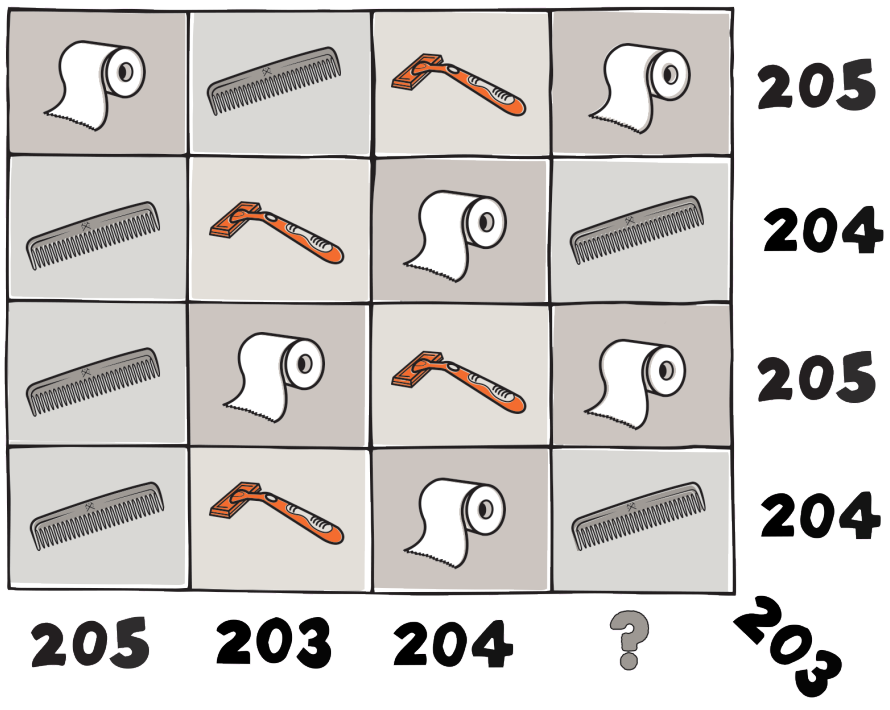
In the following diagram, th...
[2289] In the following diagram, th... - In the following diagram, the numbers have been filled in for you in all except one line. By using the information given, fill in the missing number. - #brainteasers #math - Correct Answers: 61 - The first user who solved this task is Roxana zavari
BRAIN TEASERS
enter your answer and press button OK

In the following diagram, th...

In the following diagram, the numbers have been filled in for you in all except one line. By using the information given, fill in the missing number.
Correct answers: 61
The first user who solved this task is Roxana zavari.
#brainteasers #math
Register with your Google Account and start collecting points.
Check your ranking on list.

Dumb Horse

A guys car broke down. He pulled over to the side of the road.Luckly there was a farm near by.He asked the farmer if he could help. The farmer said "sure just let me get my horse, Bruce. So they hooked the car up. The farmer called out to his horse,giddyup Sonya!
The horse did'nt move. Giddyup Tonya! The horse did'nt move. Giddyup Bruce! The horse moved. So when they got back they fixed the mans car. The man said thank you and then asked the farmer why he called different names."

Well" the farmer started, "Bruce won't do anything if he knows he's the only one doing it."

Jokes of the day - Daily updated jokes. New jokes every day.
Follow Brain Teasers on social networks

Brain Teasers

puzzles, riddles, mathematical problems, mastermind, cinemania...

Henri Braconnot

Died 13 Jan 1855 at age 73 (born 29 May 1781).French naturalist and chemist known for isolating glucose, a simple sugar, directly from such plant material as sawdust, linen or bark by boiling them with acid (1819). Previously, glucose had only been derived from starch. In 1811, he was the first to find fungtine - in mushrooms. (It was named chitin in the 1830's when it was also isolated in insects.) Chitin is one of the most abundant polysaccharides found in nature. In 1832, Braconnot prepared “xyloidine”by treating starch, sawdust, and cotton with nitric acid. He found that this material was soluble in wood vinegar and attempted to make coatings, films, and shaped articles from it. This was an early discovery preceding the work of other scientists with nitrocellulose that led to the advent of plastics and rayon.
This site uses cookies to store information on your computer. Some are essential to help the site properly. Others give us insight into how the site is used and help us to optimize the user experience. See our privacy policy.