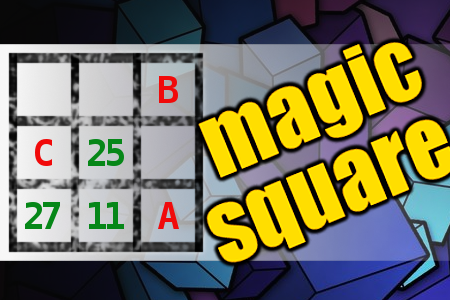
MAGIC SQUARE: Calculate A+B*C
The aim is to place the some numbers from the list (4, 6, 11, 14, 16, 21, 25, 27, 32, 88) into the empty squares and squares marked with A, B an C. Sum of each row and column should be equal. All the numbers of the magic square must be different. Find values for A, B, and C. Solution is A+B*C.Correct answers: 37
The first user who solved this task is Sanja Šabović.
#brainteasers #math #magicsquare

A man lost both ears in an acc...
A man lost both ears in an accident. No plastic surgeon could offer him a solution. He heard of a very good one in Sweden, and went to him.
The new surgeon examined him, thought a while, and said: " Yes, I can put you right."
After the operation, bandages off, stitches out, he goes to his hotel.
The morning after, in a rage, he calls his surgeon, and yells, "You bastard, you gave me a woman's ears."
"Well, an ear is an ear, it makes no difference whether it is a man's or a woman's."
"You're wrong, I hear everything, but I don't understand a thing!"
The new surgeon examined him, thought a while, and said: " Yes, I can put you right."
After the operation, bandages off, stitches out, he goes to his hotel.
The morning after, in a rage, he calls his surgeon, and yells, "You bastard, you gave me a woman's ears."
"Well, an ear is an ear, it makes no difference whether it is a man's or a woman's."
"You're wrong, I hear everything, but I don't understand a thing!"