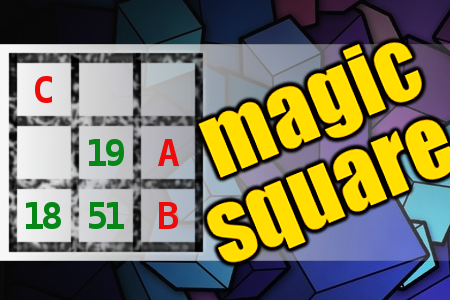
MAGIC SQUARE: Calculate A-B*C
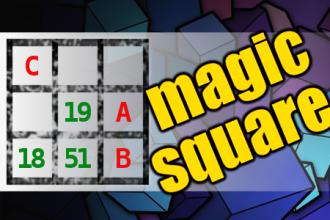
The aim is to place the some numbers from the list (16, 18, 19, 24, 26, 27, 42, 51, 53, 54, 67) into the empty squares and squares marked with A, B an C. Sum of each row and column should be equal. All the numbers of the magic square must be different. Find values for A, B, and C. Solution is A-B*C.
Blonde gets haircut
A blonde went to a beauty salon to get a haircut. When the beautician approached the chair where the blonde was waiting, she noticed that she was wearing a walkman. The beautician took the blonde to her styling booth. She asked the blonde, "Please take off the walkman so I can cut your hair." The blonde replied, "I can't do without it, just cut around it."
The beautician shook her head in disbelief and started cutting. A few minutes later the beautician stopped and asked the blonde, "I just can't cut your hair properly while you are wearing that walkman. Please take it off." The blonde replied, "I just can't live without it, cut around it please." The beautician started cutting again and finally had had enough.
The beautician reached down and pulled the earphones from the walkman off the blonde. Just as she did so the blonde froze, then fell out off the chair and on to the floor. The staff at the salon rushed to her aid only to discover she was stone dead. All were stunned! The beautician lifted the earphones to her ear to listen to what was so important to the blonde.
In a soft but commanding voice she heard, "Breathe in.......... Breathe out............ Breathe in.......... Breathe out............ Breathe in.......... Breathe out............"