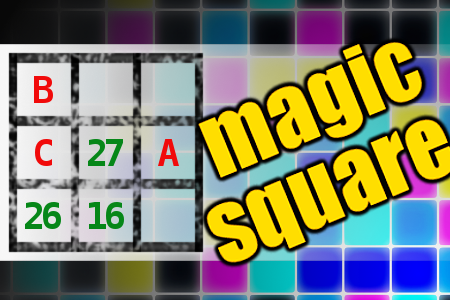
MAGIC SQUARE: Calculate A-B+C
The aim is to place the some numbers from the list (5, 8, 9, 10, 11, 16, 18, 26, 27, 34, 46, 77) into the empty squares and squares marked with A, B an C. Sum of each row and column should be equal. All the numbers of the magic square must be different. Find values for A, B, and C. Solution is A-B+C.Correct answers: 23
The first user who solved this task is Manguexa Wagle.
#brainteasers #math #magicsquare

A man is at work one day when...
A man is at work one day when he notices that his co-worker is wearing an earring.
This man knows his co-worker to be a normally conservative fellow, and is curious about his sudden change in "fashion sense."
The man walks up to him and says, "I didn't know you were into earrings."
"Don't make such a big deal out of this, it's only an earring," he replies sheepishly.
His friend falls silent for a few minutes, but then his curiosity prods him to say, "So, how long have you been wearing one?"
"Ever since my wife found it in my truck..."
This man knows his co-worker to be a normally conservative fellow, and is curious about his sudden change in "fashion sense."
The man walks up to him and says, "I didn't know you were into earrings."
"Don't make such a big deal out of this, it's only an earring," he replies sheepishly.
His friend falls silent for a few minutes, but then his curiosity prods him to say, "So, how long have you been wearing one?"
"Ever since my wife found it in my truck..."