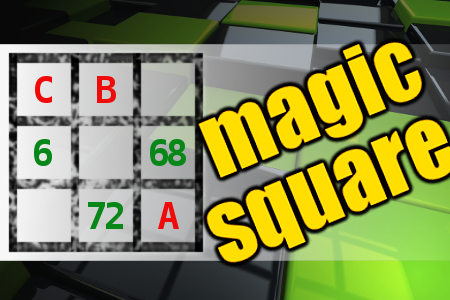
MAGIC SQUARE: Calculate A*B*C
The aim is to place the some numbers from the list (2, 5, 6, 8, 11, 12, 68, 71, 72, 80) into the empty squares and squares marked with A, B an C. Sum of each row and column should be equal. All the numbers of the magic square must be different. Find values for A, B, and C. Solution is A*B*C.
Cool Cat
A very traditional elderly woman was enjoying a good game of bridge with her girlfriends one evening. "Oh, no! I have to rush home and fix dinner for my husband! He's going to really ticked if it's not ready on time!" she exclaimed suddenly.
When she got home, she realized that she didn't have enough time to go to the supermarket, and all she had in the cupboard was a wilted lettuce leaf, an egg, and a can of cat food. In a panic, she opened the can of cat food, stirred in the egg, and garnished it with the lettuce leaf just as her husband pulled up.
She greeted her husband and then watched in horror as he sat down to his dinner. To her surprise, the husband really enjoyed his dinner. "Darling, this is the best dinner you have made for me in forty years of marriage. You can make this for me any old day."
Needless to say, every bridge night from then on, the woman made her husband the same dish. She told her bridge cronies about it and they were all horrified.
"You're going to kill him!" they exclaimed.
Two months later, her husband died.
The women were sitting around the table playing bridge when one of the cronies said, "You killed him! We told you that feeding him that cat food every week would do him in! How can you just sit there so calmly and play bridge knowing you murdered your husband?"
The wife stoically replied, "I didn't kill him. He fell off the mantel while he was cleaning himself."