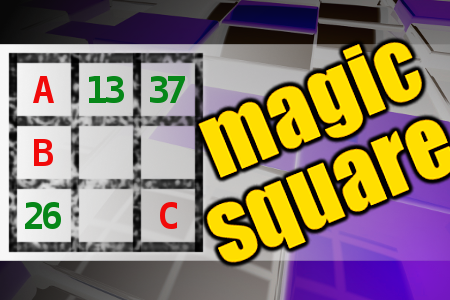
MAGIC SQUARE: Calculate A-B*C
The aim is to place the some numbers from the list (13, 18, 24, 26, 31, 34, 37, 39, 45, 62) into the empty squares and squares marked with A, B an C. Sum of each row and column should be equal. All the numbers of the magic square must be different. Find values for A, B, and C. Solution is A-B*C.
Marriage Counseling
A husband and wife came for counselling after 25 years of marriage. When asked what the problem was, the wife went into an angry tirade listing each and every problem they had ever had in the 25 years they had been married.
She went on and on: neglect, lack of intimacy, emptiness, loneliness, feeling unloved and unloveable, a long list of unmet needs she had endured over the course of their quarter century of marriage.
Finally, after allowing this to go on for a sufficient length of time, the therapist stood up, walked around his desk and, asking the wife to stand, embraced her and kissed her passionately on the mouth.
The woman shut up and, in a daze, quietly sat down;. The therapist turned to the husband and said, "This is what your wife needs at least seven times a week. Do you think you can do this?"
The husband thought for a moment and replied, "Well, Doc, I can drop her off here on Mondays and Wednesdays, but on the other days I play golf."