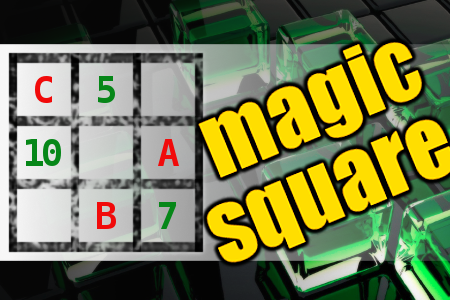
MAGIC SQUARE: Calculate A-B-C
The aim is to place the some numbers from the list (5, 7, 9, 10, 11, 14, 20, 66, 68, 71, 83, 96) into the empty squares and squares marked with A, B an C. Sum of each row and column should be equal. All the numbers of the magic square must be different. Find values for A, B, and C. Solution is A-B-C.
Praying and Sleeping
Two men arrive at the Pearly Gates at about the same time, both wanting to know if they will be admitted to heaven. St. Peter asks the first man his name, where he is from, and what he did in life.
The man answers that he is John Smith and that he was a taxi driver in New York City.
St. Peter looks through his book, then gives the man a luxurious silken robe and a golden staff, and bids him welcome into heaven for his eternal reward.
St. Peter then asks the second man the same questions. He replies that his name is Thomas O’Malley, and that he was a Catholic priest in Chicago. St. Peter looks in his book, then gives him a cotton robe and a wooden staff, and bids him to enter into heaven for his eternal reward.
Father O’Malley says, Wait a minute! Why did that taxi driver get a silken robe and golden staff while I, a Catholic Priest and a man of God, got a cotton robe and wooden staff?
St. Peter told him that the rewards in heaven are based on results, and while Father O’Malley preached, people slept, but while John Smith drove, people prayed!