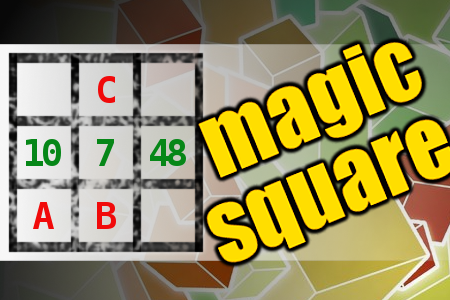
MAGIC SQUARE: Calculate A+B+C
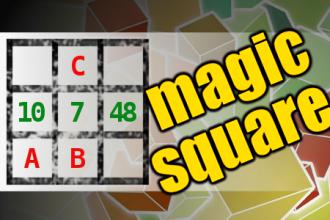
The aim is to place the some numbers from the list (5, 6, 7, 8, 9, 10, 48, 50, 52) into the empty squares and squares marked with A, B an C. Sum of each row and column should be equal. All the numbers of the magic square must be different. Find values for A, B, and C. Solution is A+B+C.Correct answers: 15
The first user who solved this task is Nílton Corrêa De Sousa.
#brainteasers #math #magicsquare

Bubba applied for an engineeri...
Bubba applied for an engineering position at a Lake Charles refinery. A Yankee applied for the same job and both applicants having the same qualifications were asked to take a test by the manager. Upon completion of the test, both men only missed one of the questions. The manager went to Bubba and said: "Thank you for your interest, but we've decided to give the Yankee the job."Bubba asked: "And why are you giving him the job? We both got nine questions correct. This being Louisiana, and me being a Southern boy, I should get the job!"
The manager said: "We have made our decision not on the correct answers, but rather on the one question that you both missed."
Bubba then asked: "And just how would one incorrect answer be better than the other?"
The manager replied: "Bubba, its like this. On question #4 the Yankee put down; "I don't know." You put down, "Neither do I."
The manager said: "We have made our decision not on the correct answers, but rather on the one question that you both missed."
Bubba then asked: "And just how would one incorrect answer be better than the other?"
The manager replied: "Bubba, its like this. On question #4 the Yankee put down; "I don't know." You put down, "Neither do I."