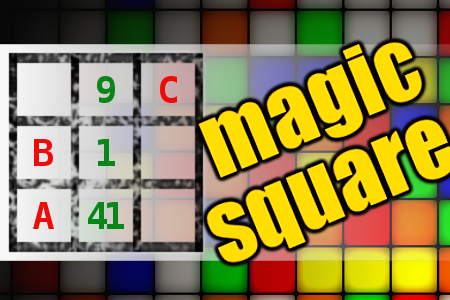
MAGIC SQUARE: Calculate A-B*C
The aim is to place the some numbers from the list (1, 2, 8, 9, 10, 17, 32, 33, 41, 45, 79) into the empty squares and squares marked with A, B an C. Sum of each row and column should be equal. All the numbers of the magic square must be different. Find values for A, B, and C. Solution is A-B*C.Correct answers: 12
The first user who solved this task is Nasrin 24 T.
#brainteasers #math #magicsquare

Jones came into the office an...
Jones came into the office an hour late for the third time in one week and found the boss waiting for him.
"What's the story this time, Jones?" he asked sarcastically. "Let's hear a good excuse for a change."
Jones sighed, "Everything went wrong this morning, Boss. The wife decided to drive me to the station. She got ready in ten minutes, but then the drawbridge got stuck. Rather than let you down, I swam across the river — look, my suit's still damp — ran out to the airport, got a ride on Mr. Thompson's helicopter, landed on top of Radio City Music Hall, and was carried here piggyback by one of the Rockettes."
"You'll have to do better than that, Jones," said the boss, obviously disappointed. "No woman can get ready in ten minutes."
"What's the story this time, Jones?" he asked sarcastically. "Let's hear a good excuse for a change."
Jones sighed, "Everything went wrong this morning, Boss. The wife decided to drive me to the station. She got ready in ten minutes, but then the drawbridge got stuck. Rather than let you down, I swam across the river — look, my suit's still damp — ran out to the airport, got a ride on Mr. Thompson's helicopter, landed on top of Radio City Music Hall, and was carried here piggyback by one of the Rockettes."
"You'll have to do better than that, Jones," said the boss, obviously disappointed. "No woman can get ready in ten minutes."