MAGIC SQUARE: Calculate A+B+C
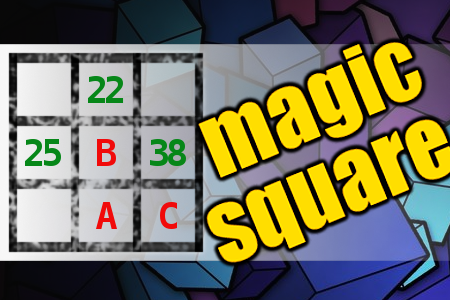
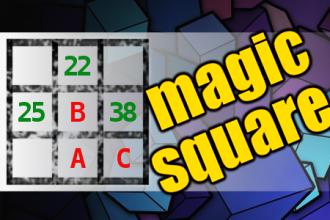
The aim is to place the some numbers from the list (21, 22, 25, 30, 31, 34, 37, 38, 41, 98) into the empty squares and squares marked with A, B an C. Sum of each row and column should be equal. All the numbers of the magic square must be different. Find values for A, B, and C. Solution is A+B+C.
Another 14 Dad jokes, be ready for Father's Day
Get your Dad jokes ready on time! Third Sunday of June is Father's Day, have fun with these!
1. Scientists say that one day, it may be possible to live on Mars.
I tried it for a month, gained nearly 3 stone in weight and developed type 2 diabetes!
2. I think I want a job cleaning mirrors.
I could really see myself doing it.
3. What did the kid Pirate say to the Mom Pirate?
Arrrn’t you glad you met Dad?
4. How do astronomers organise a party?
They planet!
5. I made a soup entirely from ingredients extracted from the atmosphere…
It was a broth of fresh air!
6. When does a regular joke become a dad joke?
When it becomes apparent.
7. It wasn’t much fun when I broke my neck last year.
But now I can look back and laugh.
8. Anyone remember that chiropractor joke I shared?
It was about a weak back.
9. I recently visited the "World's Tiniest Wind Turbine" exhibit.
Honestly, not a big fan.
10. I can’t bring my dog to the pond anymore. The ducks keep attacking him.
Guess that’s what I get for getting a pure bread dog.
11. I only seem to get sick on weekdays.
I must have a weekend immune system.
12. What did the triangle say to the circle?
You’re pointless.
13. Hey, Dad, did you get a haircut?
Nope, I got them all cut
14. Where do pigs like to relax?
In hammocks