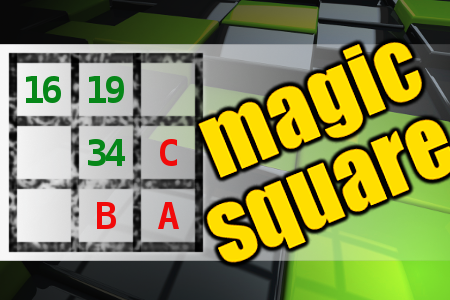

MAGIC SQUARE: Calculate A*B*C
The aim is to place the some numbers from the list (14, 15, 16, 18, 19, 20, 32, 33, 34, 54, 93) into the empty squares and squares marked with A, B an C. Sum of each row and column should be equal. All the numbers of the magic square must be different. Find values for A, B, and C. Solution is A*B*C.
Beethoven's Ninth
The symphony orchestra was performing Beethoven's Ninth.
In the piece, there's a long passage, about 20 minutes, during which the bass violinists have nothing to do.
Rather than sit around that whole time looking stupid, some bassists decided to sneak offstage and go to the tavern next door for a quick one.
After slamming several beers in quick succession, one of them looked at his watch and said, "Hey! We need to get back!"
"No need to panic," said a fellow bassist. "I thought we might need some extra time, so I tied the last few pages of the conductor's score together with string. It'll take him a few minutes to get it untangled."
A few moments later they staggered back to the concert hall and took their places in the orchestra.
About this time, a member of the audience noticed the conductor seemed a bit edgy and said as much to her companion.
"Well, of course," said her companion. "Don't you see? It's the bottom of the Ninth, the score is tied, and the bassists are loaded."