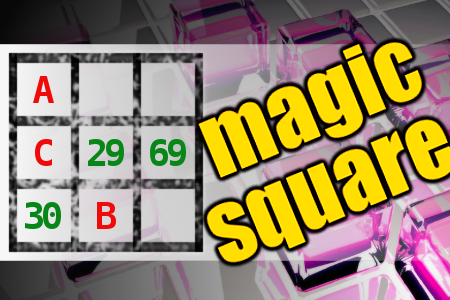
MAGIC SQUARE: Calculate A+B*C
The aim is to place the some numbers from the list (5, 6, 11, 29, 30, 35, 38, 59, 68, 69, 74) into the empty squares and squares marked with A, B an C. Sum of each row and column should be equal. All the numbers of the magic square must be different. Find values for A, B, and C. Solution is A+B*C.Correct answers: 0
#brainteasers #math #magicsquare

Dolly Parton and Queen Elizabe
Dolly Parton and Queen Elizabeth went to the Pearly Gates on the same day.
They both met with an Angel to find out if they would be admitted to Heaven.
The angel said "Unfortunately, there's only one space in Heaven today so I must decide which one of you will be admitted."
The Angel asked Dolly if there was some particular reason why she should go to Heaven. Dolly took off her top and said, "Look at these, they're the most perfect breasts God ever created and I'm sure it will please God to be able to see them every day, for eternity."
The Angel thanked Dolly, and asked Her Majesty, Queen Elizabeth the same question.
The Queen walked over to a toilet, pulled the lever and flushes it without saying a word.
The Angel immediately said, "OK, your Majesty, you may go into Heaven."
Dolly was outraged and asked, "What was that all about? I showed you two of God's own perfect creations and you turned me down. She simply flushed a commode and she got admitted to Heaven! Would you explain that to me?
"Sorry, Dolly," said the Angel, "but even in Heaven, a royal flush beats a pair - no matter how big they are."
They both met with an Angel to find out if they would be admitted to Heaven.
The angel said "Unfortunately, there's only one space in Heaven today so I must decide which one of you will be admitted."
The Angel asked Dolly if there was some particular reason why she should go to Heaven. Dolly took off her top and said, "Look at these, they're the most perfect breasts God ever created and I'm sure it will please God to be able to see them every day, for eternity."
The Angel thanked Dolly, and asked Her Majesty, Queen Elizabeth the same question.
The Queen walked over to a toilet, pulled the lever and flushes it without saying a word.
The Angel immediately said, "OK, your Majesty, you may go into Heaven."
Dolly was outraged and asked, "What was that all about? I showed you two of God's own perfect creations and you turned me down. She simply flushed a commode and she got admitted to Heaven! Would you explain that to me?
"Sorry, Dolly," said the Angel, "but even in Heaven, a royal flush beats a pair - no matter how big they are."