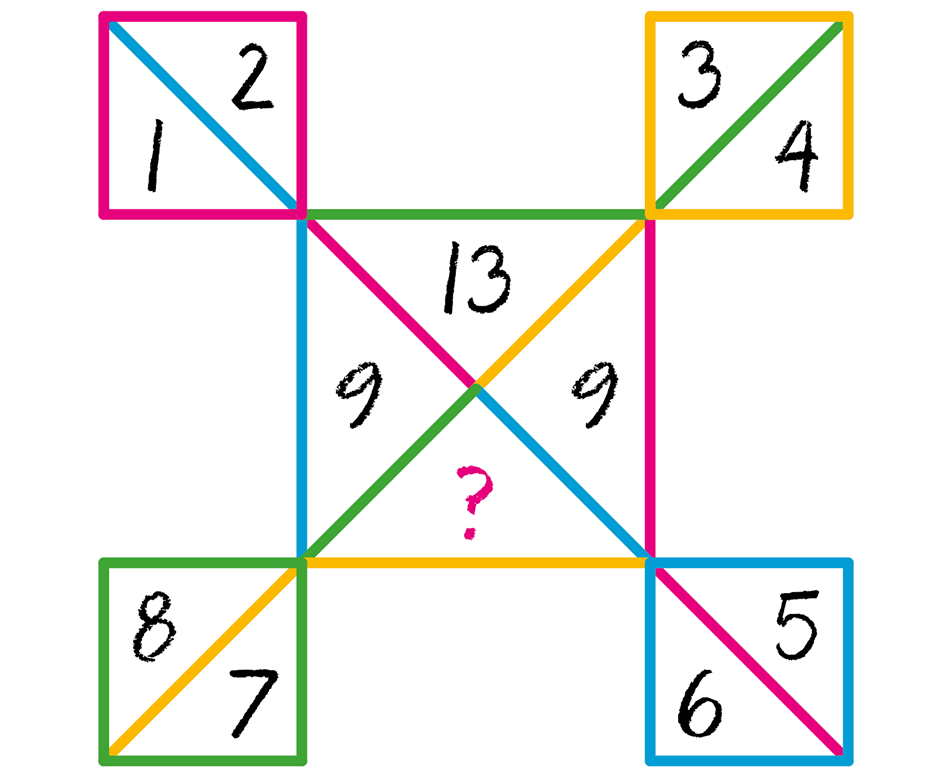
MATH PUZZLE: Can you replace...
[2923] MATH PUZZLE: Can you replace... - MATH PUZZLE: Can you replace the question mark with a number? - #brainteasers #math #riddles - Correct Answers: 666 - The first user who solved this task is Donya Sayah30
BRAIN TEASERS
enter your answer and press button OK

MATH PUZZLE: Can you replace...

MATH PUZZLE: Can you replace the question mark with a number?
Correct answers: 666
The first user who solved this task is Donya Sayah30.
#brainteasers #math #riddles
Register with your Google Account and start collecting points.
Check your ranking on list.

Some people are good at being in love

Some people are good at being in love. Some people are good at love. Two very different things, I think. Being in love is the romantic part—sex all the time, midday naps in the sheets, the jokes, the laughs, the fun, long conversations with no pauses, overwhelming separation anxiety… Just the best sides of both people, you know? But love begins when the excitement of being in love starts to fade: the stress of life sets in, the butterflies disappear, the sex not so often, the tears, the sadness, the arguments, the cattiness; the worst parts of both people. But if you still want that person by your side through all of those things… that’s when you know—that’s when you know you’re good at love.
Jokes of the day - Daily updated jokes. New jokes every day.
Follow Brain Teasers on social networks

Brain Teasers

puzzles, riddles, mathematical problems, mastermind, cinemania...

J.B.S. Haldane

Died 1 Dec 1964 at age 72 (born 5 Nov 1892). John Burdon Sanderson Haldane was an English geneticist and biometrician who opened new paths of research in population genetics and evolution. He began studying science at the age of eight, as assistant to his father (the noted physiologist John Scott Haldane). J.B.S. Haldane also worked in biochemistry, and on the effects of diving on human physiology. A Marxist from the 1930s, Haldane was well known for his outspoken Marxist views.He resigned from the Communist Party c. 1950 on the issue of Trofim Lysenko's claims to have manipulated the genetic structure of plants and “Stalin's interference with science.” He became known to a large public as a witty popularizer of science with such works as Daedalus (1924), and Possible Worlds (1927).
This site uses cookies to store information on your computer. Some are essential to help the site properly. Others give us insight into how the site is used and help us to optimize the user experience. See our privacy policy.