MATH PUZZLE: Replace the que...
[2967] MATH PUZZLE: Replace the que... - MATH PUZZLE: Replace the question marks with a numbers and calculate product these numbers. - #brainteasers #math - Correct Answers: 155 - The first user who solved this task is Roxana zavari
BRAIN TEASERS
enter your answer and press button OK

MATH PUZZLE: Replace the que...

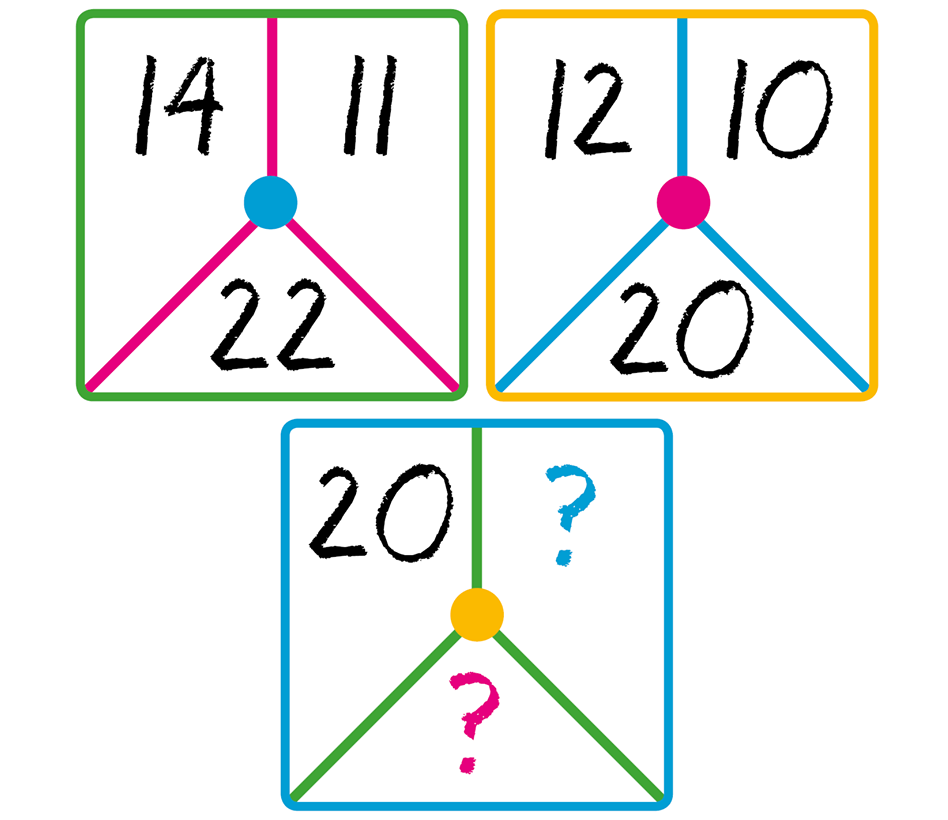
MATH PUZZLE: Replace the question marks with a numbers and calculate product these numbers.
Correct answers: 155
The first user who solved this task is Roxana zavari.
#brainteasers #math
Register with your Google Account and start collecting points.
Check your ranking on list.

World Translation Day Jokes

On 30th September we celebrate World Translation Day! Find jokes about it below:

What do you call a translator who is always on time?

A punctual linguist.

A linguistics professor was lecturing his class the other day. “In English,” he said, “a double negative forms a positive.
However, in some languages, such as Russian, a double negative remains a negative. But there isn’t a single language, not one, in which a double positive can express a negative.”
A voice from the back of the room retorted, “Yeah, right.”

Two translators on a ship are talking.“Can you swim?” asks one.“No” says the other, “but I can shout for help in nine languages.”

#worldtranslationday
Jokes of the day - Daily updated jokes. New jokes every day.
Follow Brain Teasers on social networks

Brain Teasers

puzzles, riddles, mathematical problems, mastermind, cinemania...

Svedberg's colloidal sol patent

In 1909, Swedish chemist Theodor Svedberg filed to patent his method of producing colloidal sols or gels, simultaneously in Great Britain, Germany, Denmark and Switzerland. By 1926, he received the Nobel Prize in Chemistry for his work with disperse systems. In colloidal systems, extremely fine particles are dispersed in a continuous medium, in which they remain suspended indefinitely. In molecular-disperse systems, the particles are large molecules like proteins or haemoglobin. Svedberg invented an ultracentrifuge to investigate them. At 40,000 revolutions/min, the particles were redistributed towards the periphery of the motion. Analysis of photographs of the distribution yielded the molecular weight of the particles.«
This site uses cookies to store information on your computer. Some are essential to help the site properly. Others give us insight into how the site is used and help us to optimize the user experience. See our privacy policy.