

Replace asterisk symbols with ...
[4238] Replace asterisk symbols with ... - Replace asterisk symbols with a letters (**E**E W*****) and guess the name of musician. Length of words in solution: 6,6. - #brainteasers #music - Correct Answers: 23 - The first user who solved this task is H Tav
BRAIN TEASERS
enter your answer and press button OK

Replace asterisk symbols with ...

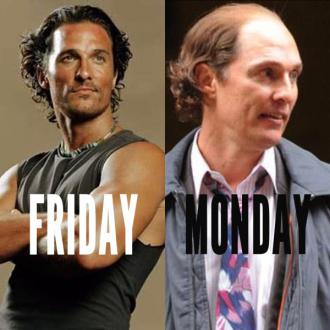
Replace asterisk symbols with a letters (**E**E W*****) and guess the name of musician. Length of words in solution: 6,6.
Correct answers: 23
The first user who solved this task is H Tav.
#brainteasers #music
Register with your Google Account and start collecting points.
Check your ranking on list.

A doctor wanted to get off wor...

A doctor wanted to get off work and go fishing, so he approached his assistant. "Murphy, I am going fishing tomorrow and don't want to close the clinic. I want you to take care of the clinic and take care of all me patients."
"Yes, sir!" answers Murphy.
The doctor goes fishing and returns the following day and asks: "So, Murphy, how was your day?"
Murphy told him that he took care of three patients... "The first one had a headache so he did...So I gave him Paracetamol."
"Very good, Murphy lad, and the second one?" asks the doctor.
"The second one had indigestion and I gave him Gaviscon," says Murphy.
"Great! You're good at this and what about the third one?" asks the doctor.
"Sir, I was sitting here and suddenly the door flies open and a young gorgeous woman bursts in. Like a bolt outta the blue, she tears off her clothes, taking off everyting including her bra and her panties and lies down on the table, spreading her legs and shouts: 'HELP ME! For five years I have not seen any man!'"
"Oh my... What did you do?" asks the doctor.
"I put drops in her eyes."
Jokes of the day - Daily updated jokes. New jokes every day.
Follow Brain Teasers on social networks

Brain Teasers

puzzles, riddles, mathematical problems, mastermind, cinemania...

Albert Wallace Hull

Born 19 Apr 1880; died 22 Jan 1966 at age 85.American physicist who independently discovered the powder method of X-ray analysis of crystals (1917), which permits the study of crystalline materials in a finely divided microcrystalline, or powder, state. His first work was on electron tubes, X-ray crystallography, and (during WW II) piezoelectricity. In the 1920's, he studied noise measurements in diodes and triodes. In the 1930's, he also took interest in metallurgy and glass science. His best-known work was done after the war, especially his classic paper on the effect of a uniform magnetic field on the motion of electrons between coaxial cylinders. He also invented the magnetron (1921) and the thyratron (1927), and other electron tubes with wide application as components in electronic circuits.
This site uses cookies to store information on your computer. Some are essential to help the site properly. Others give us insight into how the site is used and help us to optimize the user experience. See our privacy policy.