
Replace asterisk symbols with ...
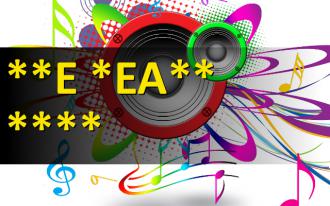
[4765] Replace asterisk symbols with ... - Replace asterisk symbols with a letters (**E *EA** ****) and guess the name of musician band. Length of words in solution: 3,5,4. - #brainteasers #music - Correct Answers: 22 - The first user who solved this task is Djordje Timotijevic
BRAIN TEASERS
enter your answer and press button OK

Replace asterisk symbols with ...

Replace asterisk symbols with a letters (**E *EA** ****) and guess the name of musician band. Length of words in solution: 3,5,4.
Correct answers: 22
The first user who solved this task is Djordje Timotijevic.
#brainteasers #music
Register with your Google Account and start collecting points.
Check your ranking on list.

Preposition

A small-town country boy gets a scholarship to Harvard. During his first week on campus, when he's still learning to get around the place, he's trying to find the library to meet up with a study group. While wandering around, he sees an older, distinguished-looking man walking by. Figuring that the man is a professor, or otherwise associated with the school, he decides to ask him for directions.

"Excuse me," he asks, "do you know where the library is at?"

The man stops, looks at him, and sniffs, "Son, at Harvard we do not end a sentence with a preposition".

"OK. Do you know where the library is at, asshole?"

Jokes of the day - Daily updated jokes. New jokes every day.
Follow Brain Teasers on social networks

Brain Teasers

puzzles, riddles, mathematical problems, mastermind, cinemania...

Camera obscura

In 1544, a solar eclipse was viewed at Louvain, which was later depicted in the first published book illustration of the camera obscura in use. Dutch mathematician and astronomer Reinerus Gemma-Frisius viewed a solar eclipse using a hole in one wall of a pavillion to project the sun's image upside down onto the opposite wall. He published the first illustrationof a camera obscura, depicting his method of observation of the eclipse in De Radio Astronomica et Geometrica (1545). Several astronomers made use of such a device in the early part of the 16th century. Both Johannes Kepler and Christopher Scheiner used a camera obscura to study the activity of sunspots. The technique was known to Aristotle (Problems, ca 330 BC).
This site uses cookies to store information on your computer. Some are essential to help the site properly. Others give us insight into how the site is used and help us to optimize the user experience. See our privacy policy.