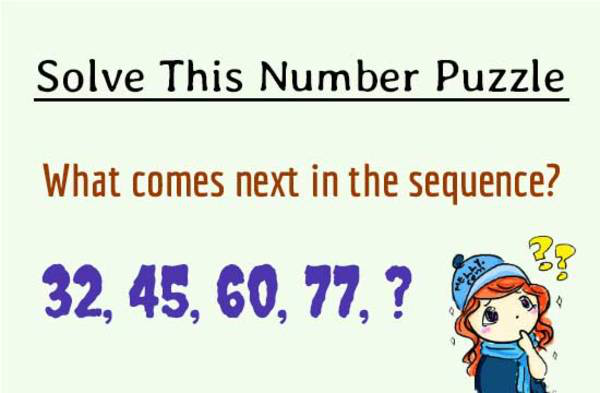
Solve this number puzzle
What comes next in the sequence 32, 45 , 60, 77, ?Correct answers: 235
The first user who solved this task is On On Lunarbasil.
#brainteasers #math #riddles

A stingy old lawyer who had be...
A stingy old lawyer who had been diagnosed with a terminal illness was determined to prove wrong the saying, "You can't take it with you."
After much thought and consideration, the man finally figured out how to take at least some of his money with him when he died. He instructed his wife to go to the bank and withdraw enough money to fill two pillow cases.
He then directed her to take the bags of money to the attic and leave them directly above his bed. His plan: When he passed away, he would reach out and grab the bags on his way to heaven.
Several weeks after the funeral, the deceased lawyer's wife, up in the attic cleaning, came upon the two pillow cases stuffed with cash.
"Oh, that darned old fool," she exclaimed. "I knew he should have had me put the money in the basement."
After much thought and consideration, the man finally figured out how to take at least some of his money with him when he died. He instructed his wife to go to the bank and withdraw enough money to fill two pillow cases.
He then directed her to take the bags of money to the attic and leave them directly above his bed. His plan: When he passed away, he would reach out and grab the bags on his way to heaven.
Several weeks after the funeral, the deceased lawyer's wife, up in the attic cleaning, came upon the two pillow cases stuffed with cash.
"Oh, that darned old fool," she exclaimed. "I knew he should have had me put the money in the basement."