Take a look at the picture of ...
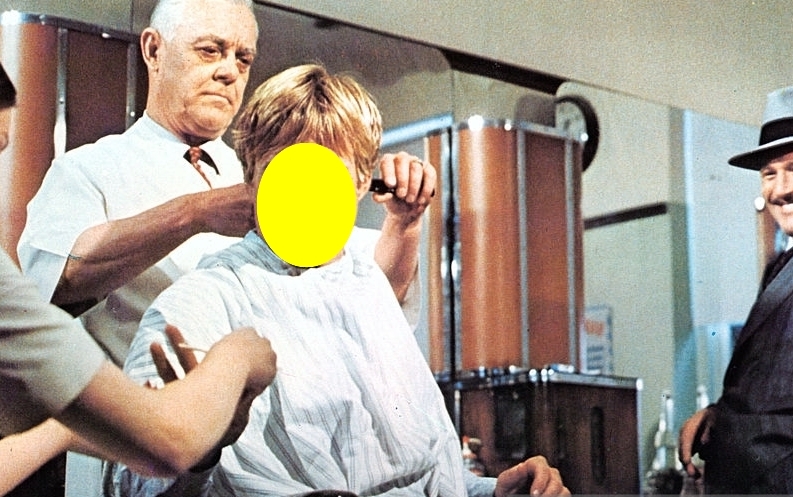
[4262] Take a look at the picture of ... - Take a look at the picture of the movie scene and guess the name of the person whose face is not visible. Length of words in solution: 6,7 - #brainteasers #movie #film #cinemania - Correct Answers: 36 - The first user who solved this task is H Tav
BRAIN TEASERS
enter your answer and press button OK

Take a look at the picture of ...

Take a look at the picture of the movie scene and guess the name of the person whose face is not visible. Length of words in solution: 6,7
Correct answers: 36
The first user who solved this task is H Tav.
#brainteasers #movie #film #cinemania
Register with your Google Account and start collecting points.
Check your ranking on list.

A young woman said to her d...

A young woman said to her doctor, 'You have to help me, I hurt all over.' 'What do you mean?' said the doctor. The woman touched her right knee with her index finger and yelled,'Ow, that hurts.' Then she touched her left cheek and again yelled, 'Ouch! That hurts, too.' Then she touched her right earlobe. 'Ow, even THAT hurts.' The doctor asked the woman, 'Are you a natural blonde?' 'Why yes,' she said. 'I thought so,' said the doctor. 'You have a sprained finger.'

Jokes of the day - Daily updated jokes. New jokes every day.
Follow Brain Teasers on social networks

Brain Teasers

puzzles, riddles, mathematical problems, mastermind, cinemania...

John C. Polanyi

Born 23 Jan 1929. German-Canadian chemist and educator who shared the Nobel Prize for Chemistry in 1986 (with Dudley R. Herschbach and Yuan T. Lee) for contributions to the “development of a new field of research in chemistry - reaction dynamics.” Polanyi was recognised his study of infrared chemiluminescence. In experiments on the reaction of atomic hydrogen and molecular chlorine he discovered the emission of a faint infrared light (chemiluminescence), which provided quantitative information on the vibrational and rotational energy released in chemical reactions. In 1960, he published a paper suggesting that the products of the hydrogen-chlorine reaction (and similar reactions) would act as a suitable medium for a chemical laser.«
This site uses cookies to store information on your computer. Some are essential to help the site properly. Others give us insight into how the site is used and help us to optimize the user experience. See our privacy policy.