What a winning combination?
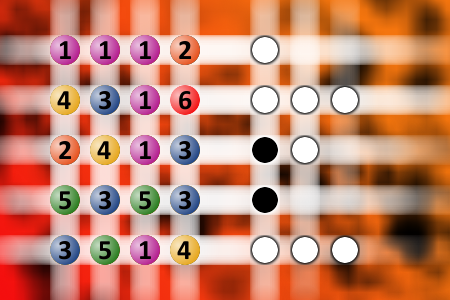
The computer chose a secret code (sequence of 4 digits from 1 to 6). Your goal is to find that code. Black circles indicate the number of hits on the right spot. White circles indicate the number of hits on the wrong spot.
Loud Train
A man had to attend a large convention in Chicago. On this particular trip he decided to bring his wife. When they arrived at their hotel and were shown to their room, the man said: "You rest here while I register - I'll be back within an hour."
The wife lies down on the bed... just then, an elevated train passes by very close to the window and shakes the room so hard she's thrown out of the bed. Thinking this must be a freak occurrence, she lies down once more. Again a train shakes the room so violently, she's pitched to the floor.
Exasperated, she calls the front desk, asks for the manager. The manager says he'll be right up. The manager (naturally) is sceptical but the wife insists the story is true.
"Look,... lie here on the bed - you'll be thrown right to the floor!"
So he lies down next to the wife... Just then the husband walks in. "What," he says, "are you doing here?"
The manager replies: "Would you believe I'm waiting for a train?"