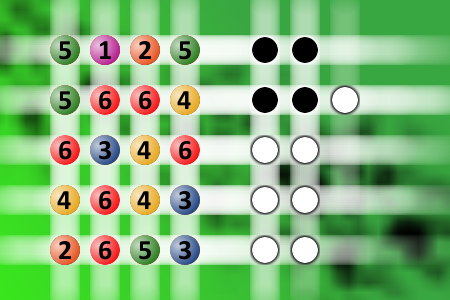
What a winning combination?
The computer chose a secret code (sequence of 4 digits from 1 to 6). Your goal is to find that code. Black circles indicate the number of hits on the right spot. White circles indicate the number of hits on the wrong spot.Correct answers: 24
The first user who solved this task is Nasrin 24 T.
#brainteasers #mastermind

A sweet grandmother telephoned...
A sweet grandmother telephoned St. Joseph's Hospital and she timidly asked, "Is it possible to speak to someone who can tell me how a patient is doing?"
The operator responded, "I'll be glad to help, dear. What's the patient's name and room number?"
The grandmother in her weak tremulous voice said, "Norma Findlay, Room 302."
The operator replied, "Let me place you on hold while I check with her nurse."
After a few minutes the operator returned to the phone, "Oh, good news. Her nurse has told me that Norma is doing very well. Her blood pressure is fine; her blood work just came back as normal. And her physician, Dr.Cohen, has scheduled her to be discharged Tuesday."
The grandmother said, "Thank you. That's wonderful. I was so worried! God bless you for the good news."
The operator replied, "You're more than welcome. Is Norma your daughter?"
The grandmother said, "No, I'm Norma Findlay in Room 302. No one tells me anything."
The operator responded, "I'll be glad to help, dear. What's the patient's name and room number?"
The grandmother in her weak tremulous voice said, "Norma Findlay, Room 302."
The operator replied, "Let me place you on hold while I check with her nurse."
After a few minutes the operator returned to the phone, "Oh, good news. Her nurse has told me that Norma is doing very well. Her blood pressure is fine; her blood work just came back as normal. And her physician, Dr.Cohen, has scheduled her to be discharged Tuesday."
The grandmother said, "Thank you. That's wonderful. I was so worried! God bless you for the good news."
The operator replied, "You're more than welcome. Is Norma your daughter?"
The grandmother said, "No, I'm Norma Findlay in Room 302. No one tells me anything."