What a winning combination?
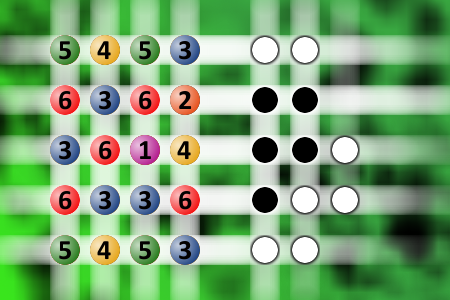
The computer chose a secret code (sequence of 4 digits from 1 to 6). Your goal is to find that code. Black circles indicate the number of hits on the right spot. White circles indicate the number of hits on the wrong spot.Correct answers: 16
The first user who solved this task is Nasrin 24 T.
#brainteasers #mastermind

Ten Thoughts to Ponder...
Number 10
Life is sexually transmitted.
Number 9
Good health is merely the slowest possible rate at which one can die.
Number 8
Men have two emotions: Hungry and Horny. If you see him without an erection, make him a sandwich.
Number 7
Give a person a fish and you feed them for a day; teach a person to use the Internet and they won't bother you for weeks.
Number 6
Some people are like a Slinky.....not really good for anything, but you still can't help but smile when you shove them down the stairs.
Number 5
Health nuts are going to feel stupid someday, lying in hospitals dying of nothing.
Number 4
All of us could take a lesson from the weather. It pays no attention to criticism.
Number 3
Why does a slight tax increase cost you two hundred dollars and a substantial tax cut saves you thirty cents?
Number 2
In the 60s, people took acid to make the world weird. Now the world is weird and people take Prozac to make it normal.
AND THE NUMBER 1 THOUGHT...
America knows exactly where one cow with mad-cow disease is located among the millions and millions of cows in America, but they haven't got a clue as to where thousands of illegal immigrants and terrorists are located. Maybe the USA should put the Department of Agriculture in charge of immigration.
Life is sexually transmitted.
Number 9
Good health is merely the slowest possible rate at which one can die.
Number 8
Men have two emotions: Hungry and Horny. If you see him without an erection, make him a sandwich.
Number 7
Give a person a fish and you feed them for a day; teach a person to use the Internet and they won't bother you for weeks.
Number 6
Some people are like a Slinky.....not really good for anything, but you still can't help but smile when you shove them down the stairs.
Number 5
Health nuts are going to feel stupid someday, lying in hospitals dying of nothing.
Number 4
All of us could take a lesson from the weather. It pays no attention to criticism.
Number 3
Why does a slight tax increase cost you two hundred dollars and a substantial tax cut saves you thirty cents?
Number 2
In the 60s, people took acid to make the world weird. Now the world is weird and people take Prozac to make it normal.
AND THE NUMBER 1 THOUGHT...
America knows exactly where one cow with mad-cow disease is located among the millions and millions of cows in America, but they haven't got a clue as to where thousands of illegal immigrants and terrorists are located. Maybe the USA should put the Department of Agriculture in charge of immigration.